


When you choose jewelry for a new piercing, you need to think about the metal's surface. A rough surface can injure your skin and cause irritation. Mirror polishing makes the jewelry's surface extremely smooth. This reduces the risk of infection and helps your body heal faster. Well-polished jewelry protects your health as much as the piercer's technique.
Key Points
Well-polished jewelry reduces the risk of infection and promotes rapid healing.
A smooth surface prevents micro-injuries and irritation, ensuring optimal comfort.
Mirror polishing limits bacterial buildup, thus protecting your skin.
Choosing quality materials such as titanium or surgical steel ensures uncomplicated healing.
Always inspect the finish of your jewelry before purchasing to avoid rough surfaces.
Risks of poorly polished jewelry
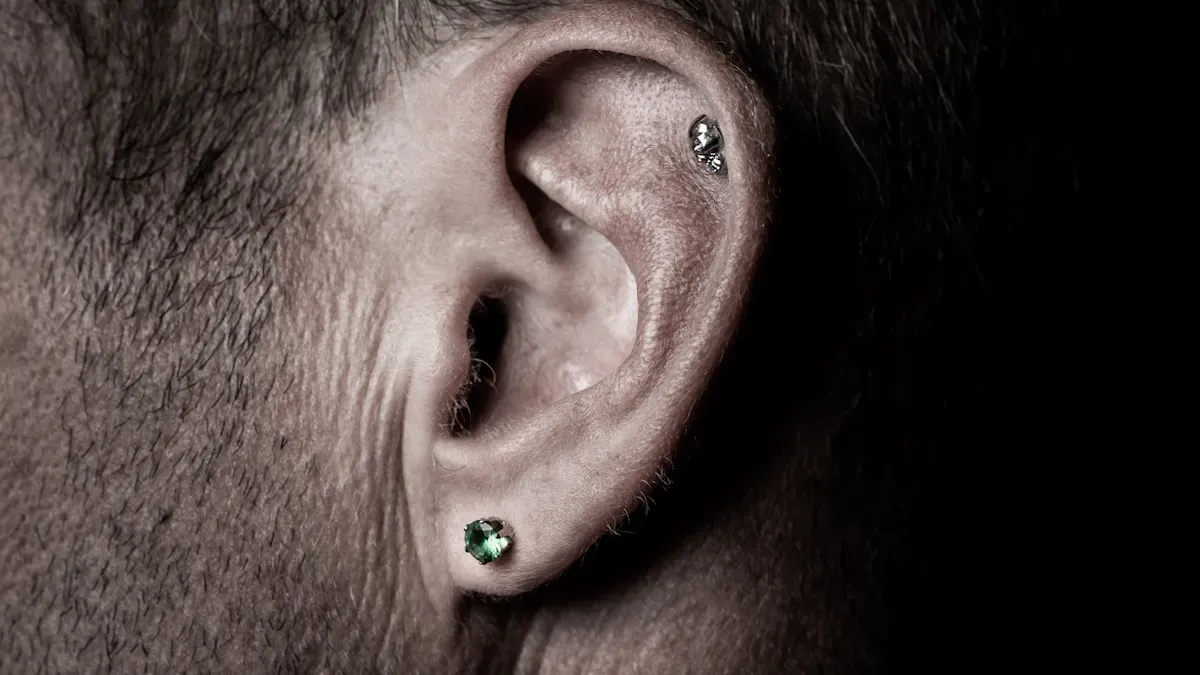
Micro-injuries and irritation
You expose your skin to dangers when you wear a poorly polished piece of jewelry. A rough surface creates micro-snags. These small imperfections can cause injuries invisible to the naked eye. You often experience symptoms such as redness, dryness, or itching. Sometimes, you may notice a hot or burning sensation. The area becomes sensitive to the touch and may swell. If the irritation worsens, you may notice pimples, blisters, or even cracks.
Micro-injuries slow down healing and make the skin more vulnerable. You often underestimate these risks because they are not always immediately visible.
Bacterial buildup
A non-smooth surface attracts bacteria. Micro-snags trap impurities and facilitate bacterial proliferation. You increase the risk of infection, especially during the healing phase. Bacteria settle in the small cracks and take advantage of every imperfection.
-
Here are some possible consequences:
Local infection
Pus formation
Persistent pain
Unpleasant odor
You must understand that mirror polishing limits bacterial adhesion. An ultra-smooth surface prevents microbes from settling.
Delayed healing
When you choose poorly polished jewelry, you prolong the healing time. Micro-injuries and infections slow down the natural healing process. Your body must fight repeated aggressions. You notice that the skin remains fragile for longer.
Well-polished jewelry promotes rapid and healthy healing. You avoid complications and enjoy optimal comfort.
You should always check the quality of the finish before wearing a piece of jewelry. The risks associated with a rough surface are often underestimated, but they can have a major impact on your health.
Mirror polishing and healing
Smooth surface and comfort
When you wear jewelry with a perfectly smooth surface, you immediately feel the difference. Mirror polishing transforms the jewelry into an object that is soft to the touch. You do not feel any tool marks or roughness against your skin. This meticulous finish shows the manufacturer's respect for you and for the quality of the jewelry.
Fine jewelry is polished inside and out.
The absence of marks and the smooth surface guarantee a pleasant sensation.
You enjoy optimal comfort every day.
Mirror polishing also creates a shiny surface that minimizes irregularities. The jewelry glides easily over your skin. This helps you avoid friction that can cause irritation or redness.
Well-polished jewelry offers you a comfortable wearing experience, even during the healing phase.
Reduced infections
An ultra-smooth surface plays an essential role in preventing infections. Mirror polishing reduces bacterial adhesion. Microbes find fewer places to grip on micro-polished jewelry. This limits the risk of infection, especially after a new piercing.
When the jewelry's surface does not trap impurities, it makes daily cleaning easier. You protect your skin from bacteria seeking to settle in the smallest crevices. This level of safety becomes a key argument for high-end jewelry, especially titanium.
You choose a polished piece of jewelry to protect your health and speed up healing.
Optimal healing
The choice of material also influences healing. Mirror polishing improves the natural properties of certain metals. For example, titanium contains no nickel and is highly durable. Its polished surface makes insertion pleasant and facilitates healing. You avoid tissue damage and enjoy lasting shine.
Hypoallergenic surgical steel also benefits from mirror polishing. It adapts to many areas of the body and remains compatible with healed piercings. This ensures rapid, uncomplicated healing.
Titanium: shine, comfort, easier healing, no tissue damage.
Surgical steel: hypoallergenic, suitable for several areas, perfect for healing.
You gain safety and comfort by choosing well-polished jewelry. The smooth surface promotes optimal healing and reduces the risk of complications.
Mirror polishing process
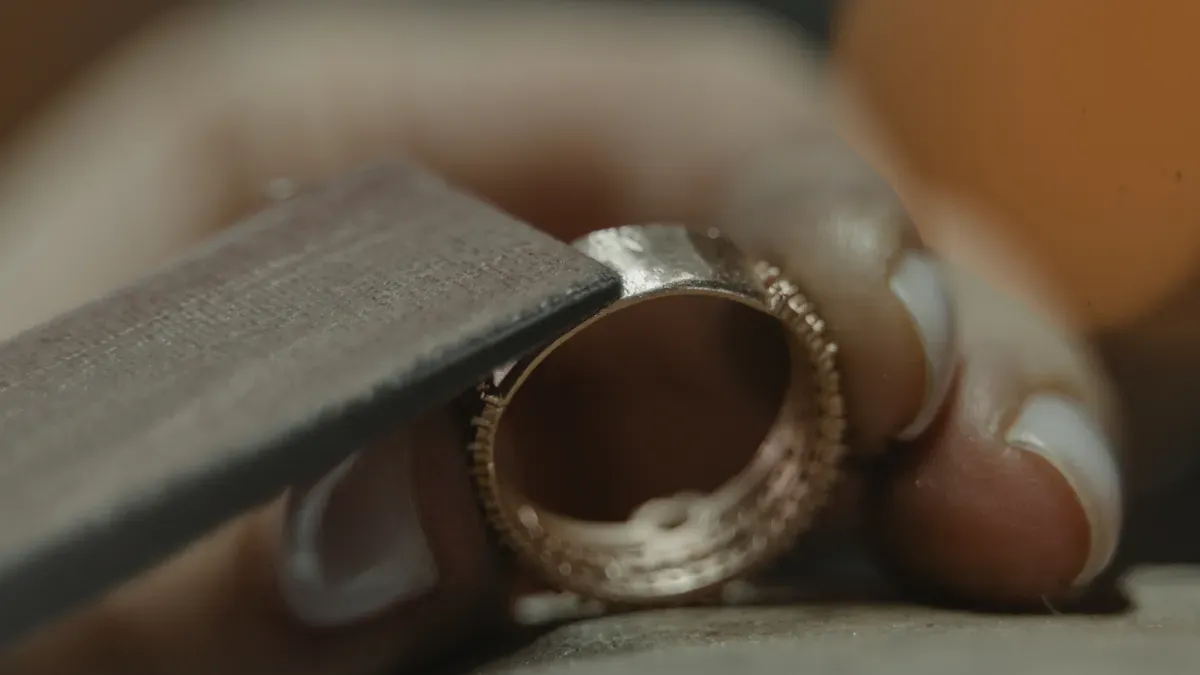
Polishing steps
You want to understand how to achieve a perfect surface for your piercing jewelry. The mirror polishing process follows several precise steps. Each step plays an important role in your skin's health.
You start with sanding with 500-grit sandpaper. This step removes the largest irregularities from the metal. You obtain a smoother base and prepare the jewelry for fine polishing.
You then use a felt wheel with polishing compound. This action gives it a shiny appearance and removes small scratches. The jewelry becomes almost as smooth as a mirror.
You can choose electropolishing for an even cleaner result. This technique uses an electric current to smooth the surface at the microscopic level. You must take precautions, as this step requires special expertise.
Each step reduces the risk of micro-injuries and bacterial buildup. You provide your skin with a soft and safe contact.
Difference from standard polishing
Standard polishing often stops after simple sanding or quick polishing. You then obtain a less uniform surface. Small imperfections remain and can irritate the skin. Mirror polishing, on the other hand, goes further. You work the surface until it becomes ultra-smooth and shiny.
You notice the difference from the first contact. A deeply polished piece of jewelry glides over the skin without snagging. You facilitate healing and reduce the risk of infection. Every step of the process counts to ensure a finish suited to your piercing's healing.
You choose mirror polishing to provide your skin with the best possible environment during healing.
Choosing well-polished jewelry
Recognizing mirror polishing
You want to know if a piece of jewelry has a mirror finish. Observe the surface under bright light. Well-polished jewelry reflects your face like a mirror. You do not see any scratches or roughness. The shine remains uniform across the entire piece. You can also touch the jewelry. The sensation should be smooth and slippery. If you feel snags or roughness, the polishing is not perfect.
Look at the details of the jewelry. Hard-to-reach areas, such as the inside or corners, must be as smooth as the outside. High-end jewelry manufacturers take care to polish every part. You often notice a difference between handcrafted jewelry and industrial jewelry. Superior-quality jewelry displays intense shine and a flawless surface.
Tip: Use a magnifying glass to inspect the surface. You will detect imperfections more easily.
Buying and maintenance tips
You want to maintain the mirror finish of your piercing jewelry. Choose suitable materials such as titanium, gold, silver, or platinum. Favor brands that guarantee professional polishing. Always ask to see the jewelry before purchasing. Check the shine and smoothness to the touch.
To maintain the mirror surface, adopt simple practices:
Use a specific polishing compound to maintain the shine on gold, silver, or platinum.
Clean the jewelry with a soft, dry cloth after each use.
Store each piece of jewelry separately to avoid scratches.
Avoid certain practices that damage the finish:
Do not use silver products on gold.
Do not leave the jewelry in acidic solutions for too long.
Never rub with abrasive materials or a hard brush.
Do not let the jewelry air-dry without wiping it.
Do not use bleach, ammonia, baking soda, or toothpaste.
Do not store several pieces of jewelry together without separation.
Take care of your jewelry to preserve its shine and ensure healthy healing.
You must think about your health when you choose a piece of jewelry for a piercing. Professionals always recommend mirror polishing to ensure your comfort and safety. This polishing prevents micro-cracks and scratches. You can follow these tips for optimal healing:
Use quality materials such as medical titanium or 14/18K gold.
Favor hypoallergenic jewelry.
Do not touch your piercing with dirty hands.
Do not use irritating products.
Check the finish before every purchase. This helps you avoid complications and promotes rapid healing.
FAQ
Is mirror polishing mandatory for all piercings?
You are not required to choose a mirror-polished piece of jewelry, but doing so greatly reduces the risk of irritation and infection. This choice promotes faster and more comfortable healing.
How can you recognize a truly mirror-polished piece of jewelry?
Observe the surface under light. You should see your reflection clearly, without scratches or spots. Run your finger over it: the sensation should be smooth, without snags.
Tip: Use a magnifying glass to check the details.
Does mirror polishing change the color of the jewelry?
No, mirror polishing does not change the color of the metal. It makes the surface shinier and more reflective. You get a brilliant effect, but the original shade remains the same.
Can I maintain the mirror finish of my jewelry myself?
Yes, you can maintain the shine with a soft cloth and suitable products. Avoid abrasive products. Store each piece of jewelry separately to avoid scratches.
Clean regularly
Handle with care


