
You're probably wondering if an industrial piercing hurts. The pain varies depending on your sensitivity and the professional's technique. You can limit the risks by following proper aftercare and choosing a quality piece of jewelry. A consultation with a specialist guarantees a safe procedure. > Take the time to discover each step so you can enjoy this experience with peace of mind.
Key Points
An industrial piercing can be painful, but the pain varies from person to person. Choosing an experienced professional can reduce this pain.
An industrial piercing takes between 6 and 12 months to heal. Daily aftercare is essential to prevent infections and promote rapid healing.
Before getting pierced, make sure your ear is suitable. A professional must examine your cartilage to avoid complications.
Choose titanium or surgical steel jewelry to limit the risk of allergies. Avoid materials such as acrylic and nickel.
Monitor your piercing after the procedure. Consult a professional if you notice redness, persistent pain, or abnormal discharge.
Industrial piercing: definition and eligibility
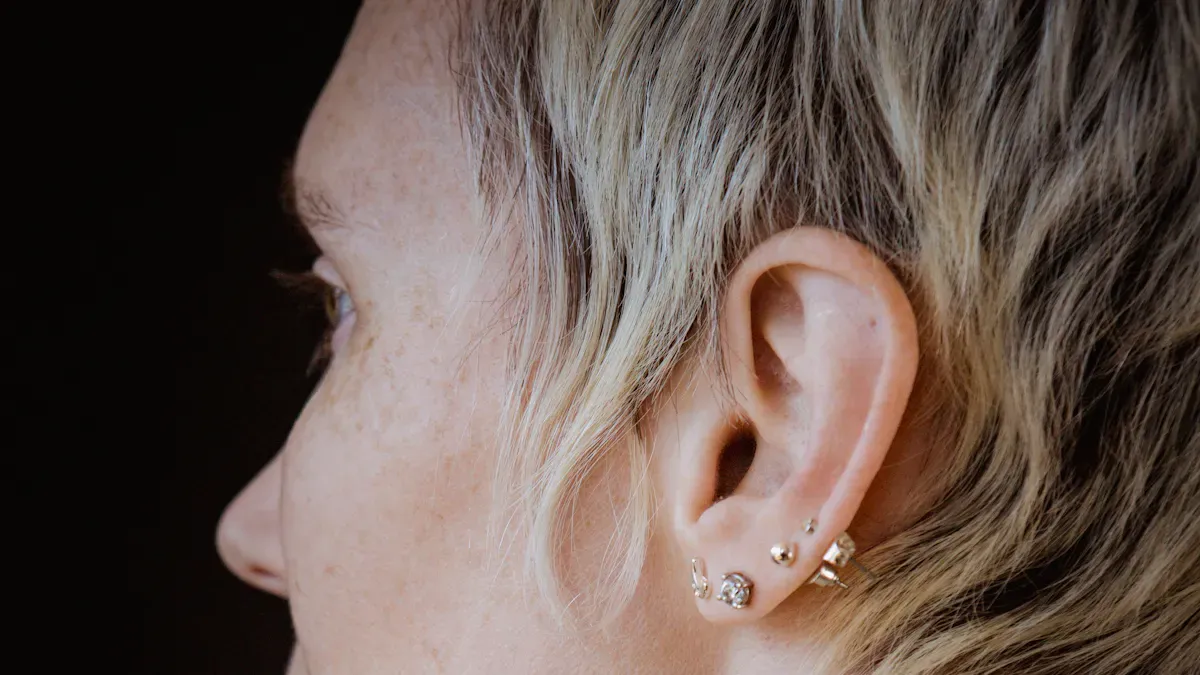
Quick definition
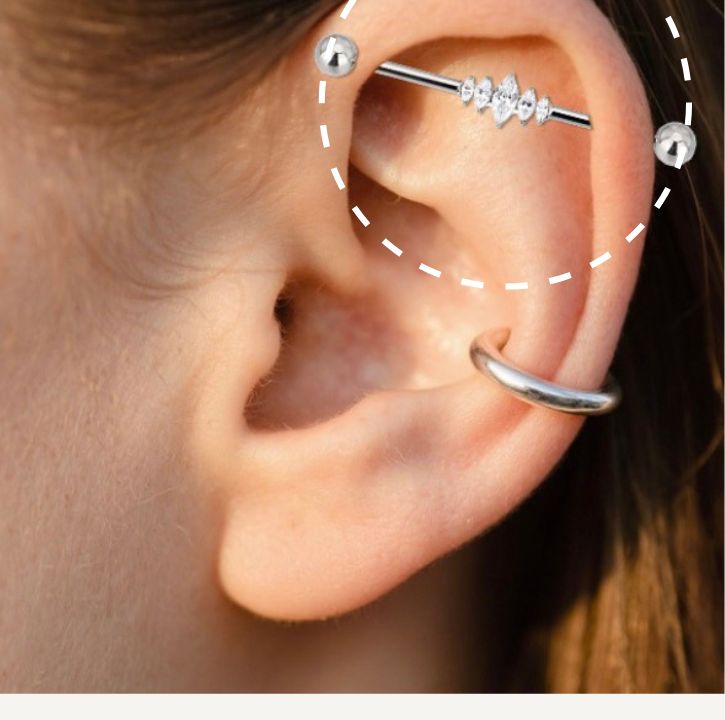
An industrial piercing connects two holes in the cartilage of the upper part of your ear with a single straight bar. This style attracts many people thanks to its original and bold look. You often choose this piercing to stand out and express your personality. This piece of jewelry remains visible and gives a unique graphic effect to your ear.
Anatomy and criteria
Before you start, you should know that not everyone has an ear suitable for an industrial piercing. Your cartilage must have certain characteristics to guarantee proper healing and limit risks. Here are the elements to check:
Ridge formation
Ear height
A professional always examines your ear before the procedure. This step remains essential to avoid complications. If your anatomy is not suitable, you risk:
Cartilage trauma that can lead to infections
Permanent ear deformities
Destructive chondritis that is difficult to treat
Possible alternatives
If your ear does not allow an industrial piercing, you can choose other options that are just as aesthetic and less risky. Here are some popular alternatives:
Ear cuffs, which are worn without piercing
Tragus piercing: discreet and trendy
Antitragus piercing: rare and original
Helix piercing: elegant and often less painful
Rook piercing: perfect for varying styles
You can thus find a piece of jewelry that suits your ear and your style, even if an industrial piercing is not possible.
Pain and healing
Pain during the procedure
You're probably wondering if getting an industrial piercing hurts. There is pain, because the professional pierces two areas of cartilage in a single session. You often feel sharp pressure or a pinch at the time of piercing. This sensation remains brief, but it can be surprising. Several factors influence the pain: your personal sensitivity, the thickness of your cartilage, the piercer's technique, and your stress level. If you are relaxed and breathe calmly, you manage the pain better. Some people feel a slight tingling or heat after the procedure. You may also have discomfort or swelling for a few days.
Tip: Choose an experienced professional. They use sterile equipment and a precise technique to limit pain.
Healing stages
Healing an industrial piercing takes time and patience. You must follow several steps before achieving a stable result. Here is what you can observe:
In the first few weeks, you notice redness, scabs, or slight swelling.
The pain gradually decreases, but the area remains sensitive.
The skin begins to regenerate around the jewelry.
The cartilage solidifies and adapts to the piercing.
According to medical studies, complete healing takes between 6 and 12 months. During this period, you must remain vigilant and monitor the evolution of your ear. If you notice persistent pain, excessive heat, or discharge, consult a professional quickly.
Essential care
To promote proper healing and avoid infections, you must adopt appropriate daily care. Here are the recommended steps:
Always wash your hands with soap and water before touching your ear.
Gently clean the piercing with a mild antibacterial soap.
Apply a little saline solution, then dry the area without rubbing.
Use an antiseptic solution only during the first 15 days.
Do not touch the unhealed piercing and avoid handling it unnecessarily.
Change your pillowcase once a week to limit bacteria.
Avoid aspirin and anticoagulants during the first 15 days.
It remains crucial not to remove the scabs that form. They protect the area and promote healing.
You should also avoid certain actions that slow down healing:
Do not use harsh antiseptics that damage the skin.
Never touch your piercing with dirty hands.
Take precautions during swimming and sports activities.
Avoid tight clothing or accessories that rub against the ear.
To limit the risk of infection, you can use an antiseptic foaming gel or a skin spray. Perform the care during the first 7 days, then space them out according to the professional's advice. Do not try to turn or remove the jewelry during healing.
By following this advice, you give yourself every chance of success with your industrial piercing and enjoy a healthy ear.
Risks and prevention
Infections and complications
You should know the main risks before you start. Infection remains the most frequent danger after an industrial piercing. You should monitor certain signs to react quickly:
Abnormal redness that persists or spreads
Swelling that does not disappear or becomes painful
Pain that does not decrease after a few days
Sensation of heat around the piercing
Thick, green, or foul-smelling secretions
If you notice one or more of these symptoms, consult a professional without delay. You may also experience skin reactions such as keloids. These growths are rare but can extend beyond the pierced area. Hypertrophic scars are more common: they form a small red bump around the jewelry, often benign. To limit these risks, you must follow the recommended care, avoid touching the piercing with dirty hands, and choose a qualified professional.
Tip: Never remove your jewelry in case of infection without medical advice. This could worsen the situation.
Materials to avoid
The choice of material for your jewelry directly influences healing and the prevention of allergies. Some materials are not recommended, especially for the first procedure:
Acrylic, even though it is biocompatible, remains fragile and does not withstand autoclave sterilization.
Nickel often causes allergies. You should avoid alloys that contain it, especially if you are sensitive.
To reduce risks, favor hypoallergenic materials such as titanium, 316L surgical steel, or G5 and G23 titanium alloys. These materials limit reactions and promote proper healing.
Tip: Always ask for the exact composition of the jewelry before the procedure. A good professional will advise you on the safest choice.
Jewelry, procedure, and price
Choosing your jewelry
For your first piece of jewelry, you should favor ASTM-F136 titanium. This material offers many advantages for an industrial piercing:
Hypoallergenic: it is perfectly suited for sensitive skin and limits allergic reactions.
Lightweight: you do not feel heaviness on the ear, which makes wearing it pleasant.
Biocompatibility: used in surgery, it guarantees optimal safety for your skin.
Durability: it resists shocks and does not tarnish over time.
Comfort: you can wear it for a long time without discomfort.
Tip: Always ask for the exact composition of the jewelry before the procedure to avoid unpleasant surprises.
Professional procedure
A good piercer follows several steps to guarantee the success of your piercing. They start by assessing the morphology of your ear to check if the procedure is possible. They then offer jewelry suited to your ear shape and take into account any medical contraindications. The professional advises you on the ideal bar size and explains the care to follow for optimal healing.
To choose a qualified piercer, check that they:
Take the time to examine your ear
Use sterile single-use equipment
Explain each step of the procedure
Provide clear advice for maintenance
Do not hesitate to ask questions about their experience and ask to see photos of their work.
Average price
In France, the price of an industrial piercing generally varies between €60 and €80. This rate includes the complexity of the procedure, the initial piece of jewelry (often titanium), sterile equipment, and personalized maintenance advice. You are thus investing in the safety and quality of the result.
Practical tips for industrial piercing
Properly preparing your ear
You should prepare your ear before getting an industrial piercing. A qualified piercer examines your morphology and uses appropriate techniques. They respect hygiene standards and advise you to avoid complications. To optimize the procedure, you can follow this advice:
Avoid alcohol and drugs before the appointment.
Ask to see the sterile needle in its packaging.
Check that the piercer wears sterile gloves.
A sterile sheet should be used for your comfort.
You should choose a professional piercing salon. The piercer must be able to refuse the procedure if your cartilage is not suitable. They respect a strict hygiene protocol to guarantee your safety.
Tips for success
You can optimize the success and healing of your industrial piercing by adopting good habits. Here are some tips:
Do not use antiseptic products, as they can slow down healing.
Never touch your piercing with your hands to avoid infections.
Favor natural products such as Derma Jouveau ointment or Easy Piercing saline solution.
Tip: Change your pillowcase regularly and avoid rubbing on the ear.
When to consult
Certain signs should alert you and lead you to consult a professional quickly. Monitor your ear carefully after the procedure:
Excessive and persistent redness, especially if the area remains hot for several days.
Increasing or intense pain that does not decrease.
Abnormal discharge, such as yellow or green pus, or foul-smelling discharge.
Fever or general malaise.
You should also consult if:
The infection does not improve after 48 hours despite care.
Abnormal swelling or a hard, painful lump appears.
The jewelry moves or the skin around it thins.
You experience worrying symptoms beyond the pierced area.
Do not wait to ask for a professional's opinion. They can prevent complications and help you keep your ear healthy.
You should remember the essential points to limit risks:
Jewelry allergies
Keloids
Always keep your hair and clothing away from the piercing. Do not sleep on the pierced ear. Leave the original jewelry until complete healing. Favor patience, as every ear heals at its own pace. Consult a professional at the slightest doubt. Re-read the practical tips to ensure the success of your industrial piercing.
FAQ
Does an industrial piercing leave a scar?
Yes, you may keep a small scar if you remove the jewelry. The size depends on the healing of your skin. You can limit the mark by following the care and avoiding pulling out the jewelry.
Can I sleep on my industrial piercing?
No, you should avoid sleeping on the pierced ear. This reduces the risk of pain, infection, and jewelry displacement. Use a hole pillow or sleep on your back for more comfort.
How long before changing the jewelry?
You should wait for complete healing, which is between 6 and 12 months. A professional can check if your ear is ready. Changing too early increases the risk of infection.
Is an industrial piercing compatible with sports?
Yes, you can continue sports. Protect your ear during physical activities. Avoid contact sports or wear a headband to limit impacts. Clean it well after each session.


