


Want to get your earlobe piercing right without any hassle? You need to take a rigorous approach from the start. Good hygiene remains essential to limit the risk of infection or pain. Following the recommendations of a professional helps you avoid common complications.
A few simple steps make a difference:
Always wash your hands before each treatment.
Clean the area with a suitable saline solution.
Never touch your piercing without reason.
Regular follow-up promotes rapid healing and keeps your ear healthy.
Key Points
Choose a specialized studio to ensure a safe experience and optimal healing.
Use an ASTM-F136 titanium piece of jewelry to avoid allergies and promote rapid healing.
Adopt a strict hygiene routine, including daily cleaning with a saline solution.
Avoid touching or turning your jewelry to prevent infections and promote rapid healing.
Be patient and wait 6 to 8 weeks before changing your jewelry or wearing headphones.
Choosing a Professional
Specialized Studio
You should choose a specialized studio for your earlobe piercing. This step guarantees a safe experience and optimal healing. A qualified professional follows strict hygiene standards and offers you personalized support. You can identify a reliable studio by following these criteria:
Analyze customer reviews. Reviews shared online or in person give you an idea of the piercer's professionalism.
Check the cleanliness of the studio. A clean environment and sterilized tools reduce the risk of infection.
Make sure that post-piercing follow-up is offered. This service allows you to ask questions and receive tailored advice.
Observe the prices charged. Prices that are too low often hide a lack of quality or safety.
Trust your gut feeling. If you feel confident during the meeting, you can move forward with peace of mind.
Tip: Favor studios that display their certifications and diplomas. Accreditations prove respect for good practices and the piercer's continuous training.
Dangers of the Piercing Gun
You must avoid the piercing gun for an earlobe piercing. This tool presents several medical risks:
More significant pain during and after the procedure.
Poorly healed scars that can deform the lobe.
Hygiene problems related to the impossibility of completely sterilizing the device.
A professional piercer uses a sterile needle, which limits complications and promotes healthy healing. You thus protect your ear and avoid mistakes that can harm your earlobe piercing.
Jewelry Suitable for an Earlobe Piercing
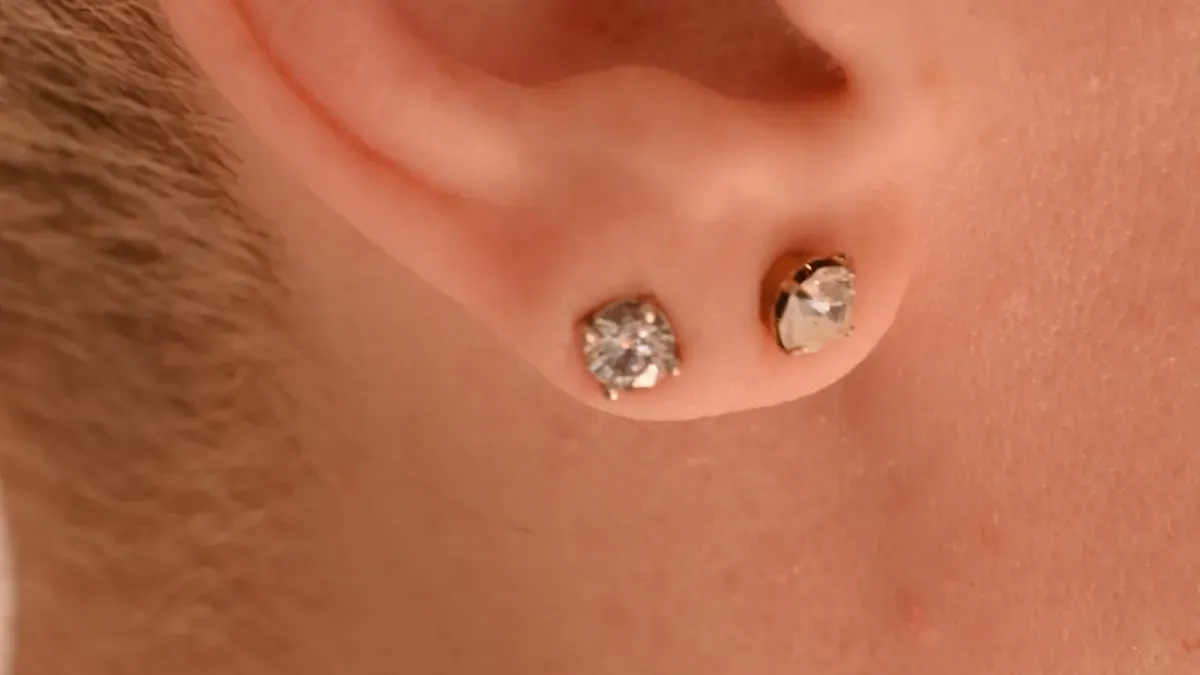
ASTM-F136 Titanium
You must choose a piece of jewelry made of ASTM-F136 titanium for your earlobe piercing. This material offers maximum safety for your skin. Dermatology experts recommend ASTM-F136 titanium for several reasons:
ASTM-F136 titanium is fully biocompatible. You thus avoid allergic reactions or irritation.
This metal does not contain nickel. It remains hypoallergenic and respects the sensitivity of your skin.
Titanium minimizes the risks of infection, irritation, or piercing migration. This protection is essential during healing.
Tip: Take the time to check the composition of the jewelry before buying it. Costume jewelry or alloys can contain nickel, which often causes allergies.
Allergic reactions to nickel manifest as redness, itching, and sometimes chronic inflammation. You must remain vigilant and choose a safe material from the start.
Labret or Other Jewelry
For an earlobe piercing, the labret remains the most recommended piece of jewelry. Its flat shape at the back limits friction and promotes rapid healing. You benefit from optimal comfort, especially during sleep.
The labret reduces the risks of injury or irritation.
It makes daily cleaning of the piercing easier.
Its stable fixation prevents the jewelry from moving or turning, which protects the lobe.
You can also opt for other suitable jewelry, but always check the quality of the material. Avoid metals such as bronze or tin, as they can cause irritation. If you notice symptoms such as redness or itching, consult a professional quickly.
Tip: Favor an ASTM-F136 titanium piece of jewelry with a labret shape to guarantee complication-free healing and lasting comfort.
Healing Time
Recommended Duration
The healing of an earlobe piercing requires patience and special attention. In general, you should count between 1 and 2 months for complete healing. Several factors influence this timeframe. Here are the main elements to consider:
A strong immune system accelerates healing.
Regular and appropriate post-piercing care promotes rapid healing.
Your overall state of health plays an important role. If you are healthy, you heal faster.
Certain medical history, such as taking anticoagulants or chronic diseases, can slow down the process.
Tip: Take care of your lifestyle. A balanced diet, quality sleep, and good hydration help your body repair itself more effectively.
Age also influences the speed of healing. Young adults often see their ear heal faster than older people. Regular local cleaning prevents infections and limits complications.
Validation by a Professional
Before changing your jewelry, you should always ask for a professional's opinion. Even if your earlobe piercing seems healed, only an expert can confirm that the healing is complete. This validation remains essential to avoid irritation or infections.
A professional observes the skin around the piercing and checks for the absence of redness or pain.
They advise you on the ideal time to change jewelry safely.
You benefit from personalized support to preserve the health of your ear.
Do not hesitate to consult your piercer if you have the slightest doubt. Regular follow-up guarantees a lasting result without complications.
Earlobe Piercing Care
Daily Cleaning
You must adopt a strict hygiene routine to protect your earlobe piercing. Professionals recommend using a sterile saline solution, such as physiological saline, to clean the area. You thus avoid irritation and promote healthy healing. Take a sterile compress and soak it in saline solution. Apply gently to the piercing, without rubbing or pressing. Repeat this step twice a day, morning and evening.
Tip: Never use alcohol or harsh products. These substances damage the skin and slow down healing. You should also avoid cotton swabs, as they can leave fibers and cause infections.
Here are the essential steps for effective cleaning:
Wash your hands before each treatment.
Prepare a sterile compress and a saline solution.
Gently clean the area around the jewelry.
Throw away the compress after use.
Following this routine allows you to limit the risks of infection and ensure optimal healing.
Proper Drying
After each cleaning, you must dry your earlobe piercing carefully. Proper drying remains crucial to avoid complications. Moisture prevents healing and promotes the proliferation of bacteria. Use a sterile compress or a clean cloth to absorb excess liquid. Dab gently, without rubbing or pressing.
Moisture creates an environment conducive to bacteria.
Adequate drying reduces inflammation and protects the area.
Tip: Never leave the area damp after treatment. Take the time to dry it well to guarantee healthy and rapid healing.
Adopting these simple steps allows you to keep your ear clean and prevent infections. You are giving yourself every chance to succeed with your earlobe piercing.
Manipulation to Avoid
Do Not Touch
You must absolutely avoid touching your earlobe piercing outside of necessary care. Your hands carry many bacteria invisible to the naked eye. When you handle your jewelry without precaution, you increase the risk of infection. Professionals insist on this point:
Never touch your piercing with dirty hands.
Do not play with your ear, even reflexively.
Avoid all activities that could soil or irritate the area, such as sports or wearing headphones.
Be careful about snagging with hair, clothing, or the phone.
Change your sheets regularly to limit the proliferation of bacteria.
💡 Tip: Favor sleeping on your back and use a protective headband if necessary. Be gentle during care so as not to damage the skin.
Frequent handling can lead to several complications:
Infections: Bacteria penetrate more easily, causing redness, pain, and sometimes pus.
Prolonged swelling: Jewelry that is too tight or handled too much can cause a sensation of heat and tension.
Healing complications: The skin becomes more vulnerable and healing slows down.
Do Not Turn the Jewelry
You should also avoid turning or moving the jewelry during healing. Contrary to some misconceptions, this does not facilitate healing. On the contrary, it causes irritation and delays the natural repair process of the skin.
Here are the negative effects observed when you turn the jewelry:
Formation of hypertrophic scarring, sometimes in the form of a lump of flesh.
Appearance of scabs around the piercing.
Risk of bleeding and additional irritation.
Delayed healing, which prolongs the period of discomfort.
🚫 Remember: The less you touch or turn your jewelry, the more you promote rapid and complication-free healing.
Protection at Night
Sleeping on Your Back
You must pay special attention to your sleeping position after an earlobe piercing. Sleeping on your back remains the best option to protect your ear and promote rapid healing. This position limits pressure on the jewelry and reduces the risks of irritation or infection.
🛌 Tip: Adopt the position on your back from the first night after the piercing. You thus avoid any direct contact with the jewelry.
Here is why you should avoid sleeping on your side with a recent piercing:
You risk leaning on the jewelry, which can cause pain or swelling.
Constant pressure slows down healing and increases the risk of infection.
Professionals recommend waiting at least 6 to 8 weeks before sleeping on the affected side.
It is strongly advised not to sleep on your piercing, especially in the early stages.
If you are used to sleeping on your side, try to gradually change your routine. Use pillows to keep yourself on your back and limit movements during the night.
Suitable Pillow
The choice of pillow directly influences the comfort and safety of your earlobe piercing. You should favor models that reduce pressure on the ear and support harmonious healing.
A special U-shaped piercing pillow allows you to sleep without pressure on the jewelry. You thus keep your ear protected all night.
A pillow designed for sleeping on your side avoids nighttime pain and protects the lobe.
Memory foam pillows distribute pressure evenly. You benefit from optimal comfort during healing.
💡 Tip: Clean your pillow regularly to limit the presence of bacteria. A clean pillow contributes to the health of your piercing.
You can also place a clean towel on your pillow to reinforce protection. Adopting these simple steps allows you to sleep peacefully and speed up the healing of your earlobe piercing.
Headphones and Earlobe Piercing
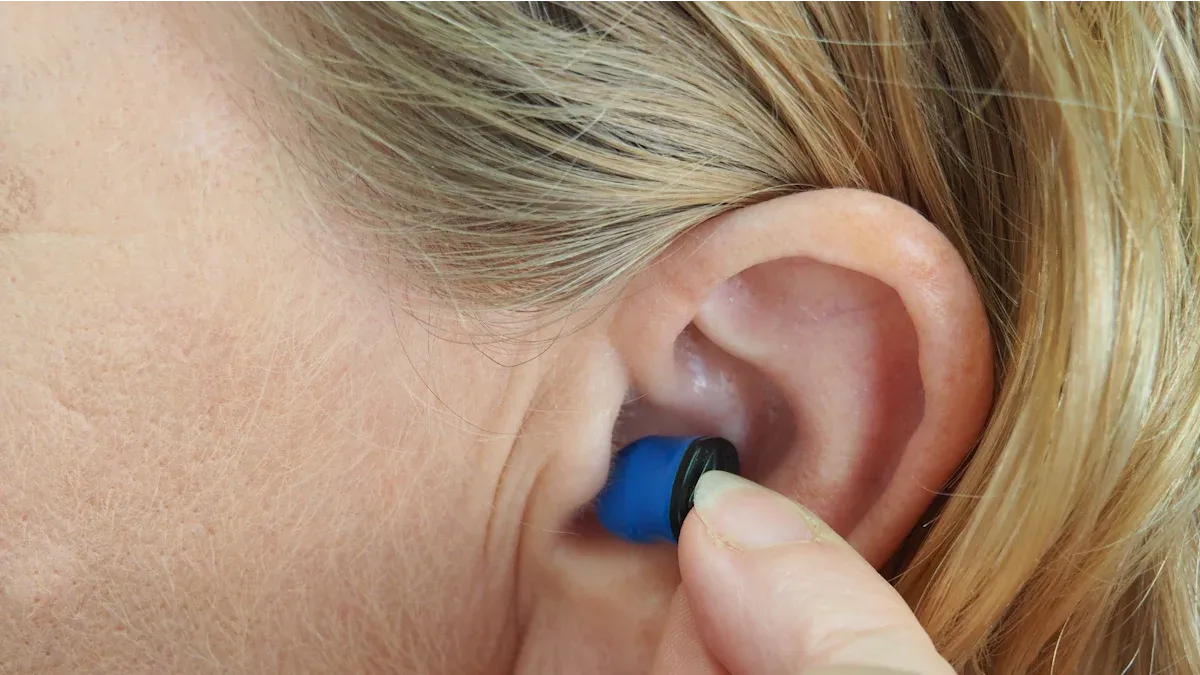
Waiting for Healing
You must show patience before putting headphones back on after an earlobe piercing. Complete healing generally takes between 6 and 8 weeks. During this period, your ear remains fragile and sensitive to external aggressions. Using headphones too early exposes your piercing to several risks:
Headphones exert direct pressure on the pierced area.
They can introduce dirt or bacteria, increasing the risk of infection.
Friction slows down healing and can cause irritation.
🕒 Tip: Wait at least 8 weeks before wearing headphones again. This precaution protects your lobe and promotes optimal healing.
If you absolutely have to listen to music or make calls, favor in-ear headphones. They limit contact with the pierced area and reduce the risks of complications. Always keep your headphones clean and disinfected before each use.
Gradual Return
Once healing is complete, you can start using earphones again, but do so gradually. Start with short sessions to see how your ear reacts. If you experience discomfort, redness, or pain, remove the earphones immediately and let your lobe rest.
Here are a few precautions to follow when you start again:
Use lightweight jewelry to avoid putting extra pressure on your lobe.
Avoid heavy earrings, especially over the long term, to protect your ear's health.
Clean your earphones regularly to limit bacterial growth.
💡 Tip: Wait about 4 months before piercing the same lobe again if you are considering a second piercing. This break ensures complete recovery and reduces the risk of complications.
By following this advice, you can enjoy your music without compromising the healing of your lobe piercing.
By following each piece of advice, you ensure the success of your lobe piercing and avoid complications. Patience remains essential: the lobe heals in 6 to 8 weeks, but each ear heals at its own pace.
Here are the benefits of a strict routine:
Reduced irritation
Even healing
If you notice excessive redness, persistent pain, or discharge, consult a professional promptly. Your vigilance ensures your ear's long-term health.
FAQ
How long should you wait before changing your jewelry?
You must wait until your lobe has completely healed, which takes about 6 to 8 weeks. A professional can confirm that it has healed. Changing it too early increases the risk of infection or irritation.
What should you do if your piercing becomes red or painful?
Observe the area. If the redness or pain persists for more than 48 hours, consult a professional promptly. Avoid self-medicating. Proper follow-up limits complications.
Can you go swimming after a lobe piercing?
It is best to avoid swimming while it is healing. Water contains bacteria that can cause an infection. Wait until it has completely healed before swimming.
What should you do if the jewelry falls out while it is healing?
Disinfect your hands. Carefully replace the jewelry if possible. If you cannot, contact your piercer promptly. Do not leave the hole empty for too long, as it may close.


