


Are you looking for an ear piercing that stands out? An anti-helix piercing gives you an incomparable touch of originality. It is located on the upper part of the cartilage, right at the edge of the ear. This choice is becoming increasingly popular thanks to its endless customization possibilities. Assert your style while remaining unique. To enjoy this experience safely, trust an expert.
Key Points
Choose a titanium, gold, or bioplastic piece of jewelry to avoid allergies and ensure comfort.
Always consult a qualified piercer. A good professional uses sterile tools and follows hygiene standards.
Follow daily care to prevent infections. Clean your piercing with a saline solution morning and evening.
Wait for complete healing before changing your jewelry. This generally takes between 6 and 12 months.
Opt for an anti-helix piercing for a unique and discreet style. It allows you to personalize your look without overdoing it.
Anti-helix piercing: location and style
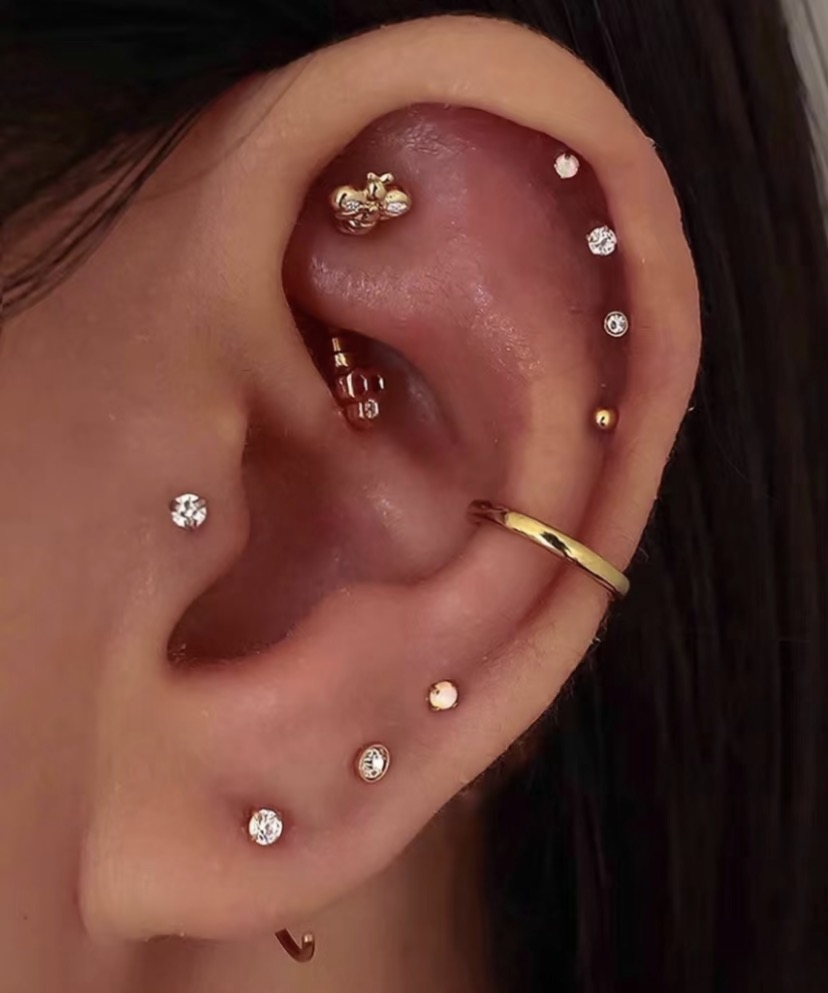
Precise location
Do you want a piercing that remains discreet while asserting your style? The anti-helix piercing is placed on the inner edge of your ear, right next to your temples. This location allows you to wear a piece of jewelry that doesn't immediately catch the eye, but attracts the attention of connoisseurs. You can choose this piercing for its subtlety and elegance. It adapts to all ear shapes and gives you the freedom to personalize your look as you wish.
Tip: If you are looking for a piercing that is less visible than classic lobe piercings, the anti-helix is perfect for you. It allows you to stand out without overdoing it.
Benefits and trends
You enjoy several benefits with the anti-helix piercing. Here is why you should consider it:
Its price remains affordable, between 35 and 55 euros.
It is located in a less exposed area, which limits prying eyes.
You can accumulate several piercings to create a unique style.
Jewelry varies: hoops, labrets, curved bars, gold, diamonds, or charms.
Current trends highlight accumulation and personalization.
You can follow the trend by opting for gold jewelry adorned with diamonds or small charms. You create a look that suits you and attract attention with your creativity. However, you must remain vigilant. A poorly done piercing can lead to complications:
Cysts and keloids: bumps due to irritation.
Jewelry rejection or migration to the surface.
Persistent swelling or lymph drainage.
Pain and increased sensitivity.
You should always choose a qualified professional to avoid these risks. This ensures the beauty and safety of your anti-helix piercing.
Preparation and procedure
Choosing a professional
Do you want a perfect and risk-free result? Take the time to select a qualified piercer. A good professional follows strict rules to guarantee your safety. Here are the essential criteria to check before getting started:
Hygiene and sterilization of tools remain an absolute priority.
The piercer's certifications and training prove their professionalism.
Transparency about the care and healing process inspires confidence.
Don't hesitate to ask questions and observe the studio. An expert will reassure you, explain each step, and give you personalized advice.
Piercing steps
On the big day, you should expect a precise protocol. A professional piercer always uses a sterile single-use needle, never a gun. They wash their hands, wear new gloves, and prepare the equipment in front of you. The jewelry used for the piercing must be surgical steel or titanium to limit the risk of allergies. Here are the main steps:
Disinfection of the area to be pierced.
Marking the location.
Piercing with a suitable needle.
Placement of the sterile jewelry.
Explanations on the care to follow.
Tip: Always handle your jewelry with clean hands and clean it regularly with a saline solution or mild soap.
Piercing price
The price of an anti-helix piercing varies according to several criteria. In France, you should expect between 30 and 50 euros. This price depends on the location of the salon, the reputation of the studio, and the experience of the piercer. Investing in a recognized professional ensures precise work and quality follow-up. This way, you avoid unpleasant surprises and fully enjoy your new jewelry.
Anti-helix piercing: choosing your jewelry
Suitable jewelry types
Do you want your anti-helix piercing to stay beautiful and healthy? The choice of jewelry plays an essential role. Experts recommend several types of jewelry for this delicate area:
Labret: This small flat stud at the back offers optimal comfort during healing. It limits friction and reduces the risk of irritation.
Hoop: You can opt for a captive hoop, which is very trendy and easy to wear. It highlights the curve of your ear.
Curved bar: This option adapts perfectly to the anatomy of the anti-helix and promotes harmonious healing.
For the initial placement, always favor jewelry made of titanium, gold, or bioplastic. These materials are hypoallergenic and respect your skin. This way, you avoid adverse reactions and ensure the beauty of your anti-helix piercing.
Tip: Avoid costume jewelry or poor-quality jewelry for the initial placement. Your health comes first!
Standard sizes
The choice of size influences the comfort and healing of your anti-helix piercing. Here is a summary table of recommended sizes:
Parameter |
Recommendation |
|---|---|
Diameter/Size |
4 mm to 6 mm, depending on your preference and the shape of your ear |
Hoop |
6 mm captive hoop, adjustable to your wishes |
Bar |
Length of 4 mm to 6 mm |
Thickness |
1.2 mm to 1.6 mm, to be adapted according to your comfort and the speed of healing |
Take the time to discuss with your piercer to choose the ideal size. Jewelry that is too tight or too loose can hinder healing.
Recommended materials
Do you want to avoid complications? Choose safe materials recognized by professionals:
ASTM-F136 Titanium: This medical material is the best tolerated by the body. It reduces the risk of allergies and rejections. Ideal for the initial placement.
14K or 18K Gold: Real gold minimizes allergic reactions and remains elegant. It is perfectly suited for sensitive skin.
Surgical steel (316L): Biocompatible and resistant, it is often used for initial placements.
Bioplastic: Lightweight and hypoallergenic, it offers additional comfort.
Absolutely avoid acrylic or poor-quality jewelry. These materials do not withstand sterilization and can cause irritation or infections. Beware of discount sites offering low-priced jewelry. Your health deserves the best.
Changing jewelry
Do you want to change your style? Take your time! It is crucial not to change your jewelry before the complete healing of your anti-helix piercing. Generally, healing takes between 6 and 12 months. Sometimes, a professional can perform a change after 2 to 3 months, but only if healing is progressing well.
Changing jewelry too early exposes your ear to several risks:
Infection, because the tissue remains fragile and vulnerable to bacteria.
Pain, redness, heat, or pus drainage.
Tearing or trauma to the cartilage.
To change your jewelry safely:
Wait for complete healing.
Always wash your hands before touching your piercing.
Clean the new jewelry before placement.
Choose jewelry of the right size and material.
Consult a professional if you have the slightest doubt.
Tip: If you want to change your jewelry before 6 months, always ask for your piercer's advice. They will know how to assess the healing and help you avoid complications.
By following these tips, you fully enjoy your anti-helix piercing, without risk to your health and with a style that suits you.
Pain and experience
Pain level
You are probably wondering if the anti-helix piercing hurts. The answer varies from person to person, but you can rest assured. Many testimonials show that the pain remains bearable. Here is what others have felt:
Some find that cartilage piercing is not very painful at the time.
Pain exists, but it remains much stronger than for a simple lobe piercing.
The cartilage in this area is quite thin, which can make the sensation briefer.
You should not fear unbearable pain. Most people describe temporary discomfort, followed by a slight tingling.
Influencing factors
Several elements can influence what you feel during the piercing:
The precise location on the cartilage plays an important role. This area is more delicate than the lobe.
Your pain tolerance threshold remains unique. Everyone reacts differently.
The studio environment, the piercer's experience, and your emotional state that day can also change your perception.
Tip: Choose an experienced professional and relax before the session. You will have a more pleasant experience.
Tips for managing pain
Do you want to limit pain and promote good healing? Adopt these simple steps:
Avoid harsh antiseptics. Favor a saline solution to clean the area.
Do not sleep on your pierced ear for several months.
Protect your ear from impacts and snags.
You can use a healing ointment, tea tree essential oil, or manuka honey to soothe the area.
By following these tips, you ensure the comfort of your anti-helix piercing and fully enjoy your new style.
Care and healing
Duration and key steps
Do you want fast and hassle-free healing? Prepare to be patient. The initial healing of an anti-helix piercing lasts at least 4 months. Professionals recommend waiting before changing jewelry to avoid any injury. Here are the key steps to know:
Inflammatory phase (days 1 to 7): You feel inflammation, redness, and sometimes slight swelling.
Proliferation phase (weeks 1 to 6/8): Your body closes the wound and forms new tissue.
Maturation phase (months 2 to 12): The skin restructures and the piercing channel thickens.
Patience and consistency offer you optimal healing.
Daily maintenance
You must adopt a strict routine to avoid infections. Here are the essential steps:
Clean your piercing morning and evening with a saline solution or a specialized spray.
Never touch your jewelry with dirty hands. Tie your hair back to limit snags.
Stay patient. Healing can take between 3 and 6 months.
Regular maintenance protects your health and guarantees an aesthetic result.
Errors to avoid
Certain errors slow down healing or cause complications. Absolutely avoid:
Unsuitable products such as antibacterial soaps, alcohol, or hydrogen peroxide.
Choosing a gun for piercing.
Poor-quality jewelry.
Neglecting care or signs of infection.
Swimming too early.
Lack of follow-up with your piercer.
Never underestimate the importance of follow-up and the quality of care.
When to consult
Always monitor warning signs. Consult a professional if you observe:
Pain that increases or persists.
Intense redness, heat, or significant swelling.
Thick, yellowish, or greenish drainage.
Fever or general malaise.
Infection remains the most frequent complication. Take care of your anti-helix piercing and consult without delay at the slightest doubt.
Tips and inspiration
Popular styles
Do you want a trendy and unique look? Discover the styles of anti-helix jewelry that are making waves right now:
Minimalist studs in titanium or 18-karat gold bring a chic and discreet touch.
Straight bars in anodized titanium offer a modern and colorful effect.
Mini 6 mm hoops with braided details or floral patterns add delicacy to your ear.
Small segment hoops or clickers make placement and changing styles easier.
You can mix several styles to create an original composition. Dare to accumulate for a highly sought-after "ear stacking" effect. You assert your personality with each jewelry piece chosen.
Guarantees and safety
Your safety must remain your priority. Always choose a certified piercer who uses sterile equipment. Demand ASTM F136 titanium or 14/18K gold jewelry to avoid allergies. Ask for a tracking card or aftercare sheet after the procedure. A serious professional will explain each step to you and remain available in case of any problems.
Never accept a piercing done with a piercing gun. Opt for a sterile needle to protect your cartilage.
You are investing in quality, avoiding complications, and enjoying your piercing with complete peace of mind.
Practical tips
For perfect healing, adopt these simple daily habits:
Clean your piercing with a mild pH-neutral soap and saline solution.
Rinse with clean water, then dry with a sterile gauze pad (never cotton).
Avoid twisting or manipulating the piercing.
Do not remove the jewelry before complete healing (6 to 9 months).
During the first two weeks, disinfect morning and evening, then continue with daily cleaning.
Tip: Never twist your jewelry while cleaning. Simply clean around the edges to minimize the risk of infection.
With these tips, you ensure the beauty and health of your anti-helix piercing. You enjoy a unique style without compromising on safety.
Want a successful anti-helix piercing? Keep these essential points in mind:
Select jewelry made of gold, titanium, or bioplastic. Opt for a labret or banana ring, 1.2 mm thick, 7 to 8 mm long.
Always consult a professional. They use sterile equipment, are experts in the needle technique, and provide follow-up care.
Follow daily aftercare to avoid infections.
Ask your questions or share your experience in the comments. Your safety and style deserve the best!
FAQ
Can I get an anti-helix piercing at any age?
You can get pierced from age 16 with parental permission. From age 18, you can decide for yourself. Always consult a professional to ensure your safety and a perfect result.
How long does it take to heal completely?
You must wait between 6 and 12 months for complete healing. Follow daily aftercare and avoid changing your jewelry too early. This maximizes your chances of success.
Does an anti-helix piercing interfere with wearing a helmet or headphones?
Tip: Choose flat or small jewelry during healing. This helps avoid rubbing and pain. You can wear a helmet, but be careful not to snag it.
Which jewelry is safest to avoid allergies?
Material |
Safety |
|---|---|
ASTM F136 Titanium |
⭐⭐⭐⭐⭐ |
14/18K Gold |
⭐⭐⭐⭐⭐ |
Surgical Steel |
⭐⭐⭐⭐ |
You prioritize these materials to protect your skin and avoid reactions.
What should I do if my anti-helix piercing gets infected?
You should quickly consult your piercer or a doctor. Do not remove the jewelry without advice. Clean the area with a saline solution and watch for warning signs. Act quickly to avoid complications.


