


Mother-of-pearl, with its iridescent luster, comes from the shell of certain mollusks. It is often used for elegant jewelry such as a mother-of-pearl ring or a Vintage Mother-of-Pearl Heart Pendant Necklace. Pearls, on the other hand, form naturally or through cultivation from this mother-of-pearl. Understanding the difference between mother-of-pearl and pearls allows you to better choose jewelry that reflects your style and needs. Each material has unique qualities that add a special touch to your accessories.
Key Points
Mother-of-pearl comes from the shell of mollusks. It is used to create modern and beautiful jewelry.
Pearls grow around a grain inside a shell. They are beautiful, classic, and always in fashion.
Choose mother-of-pearl for a simple and affordable style. Choose pearls for parties or a chic look.
Natural pearls are rare and very expensive. Cultured pearls cost less and come in several styles.
Think about your budget and the event before choosing between mother-of-pearl and pearls.
What is mother-of-pearl?
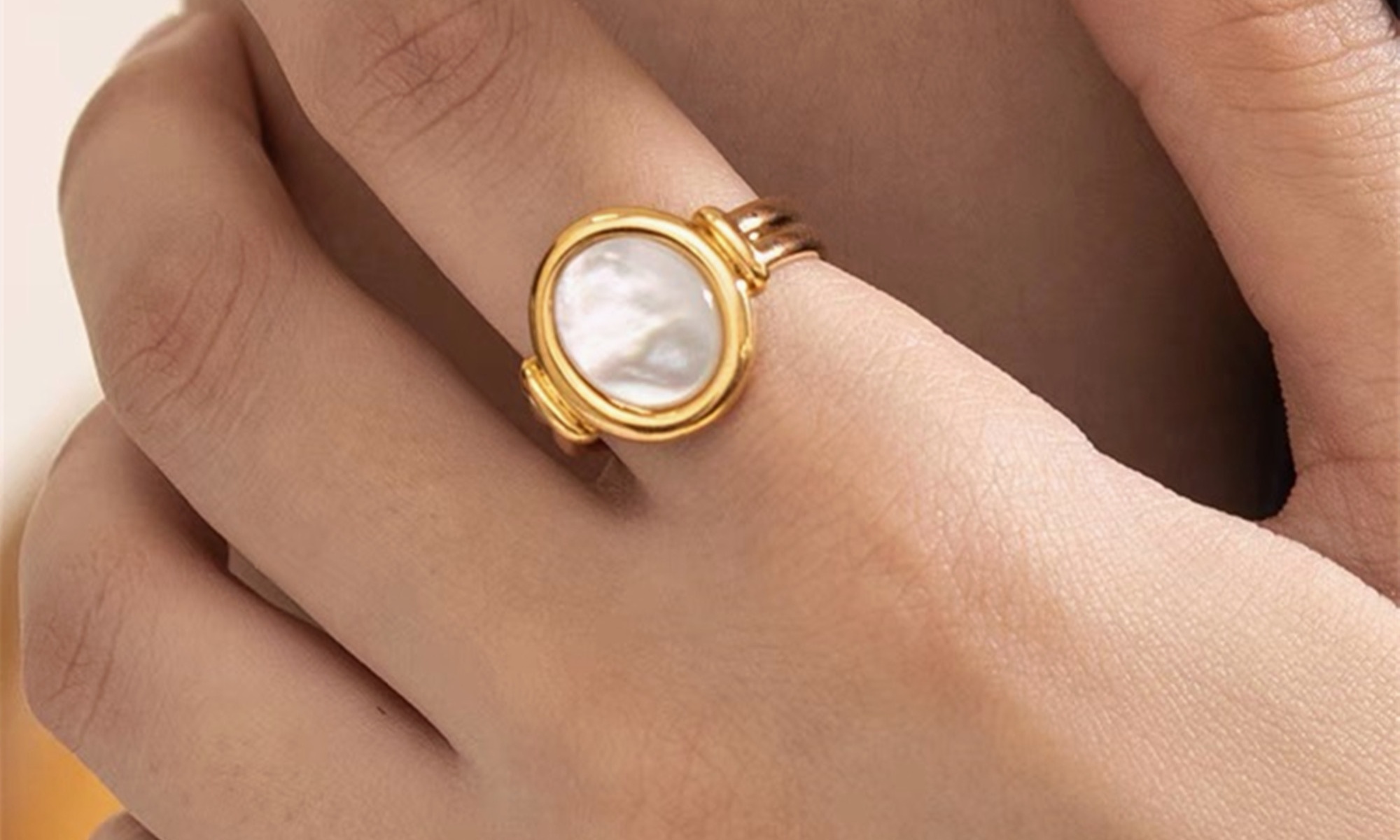
Definition and origin
Mother-of-pearl, also known as "mother-of-pearl," is an iridescent substance produced by certain marine mollusks. It is found inside their shell and serves as protection against foreign objects. You can recognize it by its luminous reflections that change depending on the angle of the light.
Some interesting facts about mother-of-pearl:
Abalone, or whelk, is a mollusk whose iridescent shell is highly prized in jewelry making.
Its hardness, measured between 3.5 and 4 on the Mohs scale, makes it a durable and easy-to-work material.
The colors of abalone mother-of-pearl range from deep blue to emerald green, with shades of purple and pink.
Chemical composition
Mother-of-pearl is mainly composed of calcium carbonate in the form of aragonite. This mineral is organized in thin layers that create its iridescent appearance. It also contains conchiolin, a protein that binds the aragonite layers together. This unique combination gives mother-of-pearl its strength and beauty.
In addition to its aesthetic role, this chemical composition protects the mollusk from predators and external damage. You can think of this structure as natural armor that is both functional and beautiful.
Role in pearl formation
Mother-of-pearl plays an essential role in the creation of pearls. When a foreign object enters a mollusk's shell, it reacts by producing mother-of-pearl to surround it. This process forms a pearl over time.
Here are some key points about this process:
The pearl develops in a "pearl sac" located in the mollusk's epithelium.
Mother-of-pearl and pearls share the same chemical composition, which explains their similar appearance.
This natural mechanism is the mollusk's response to protect itself from irritants.
The next time you admire a pearl, remember that it is the result of the meticulous work of mother-of-pearl, transforming a simple grain of sand into a true work of art.
What is a pearl?
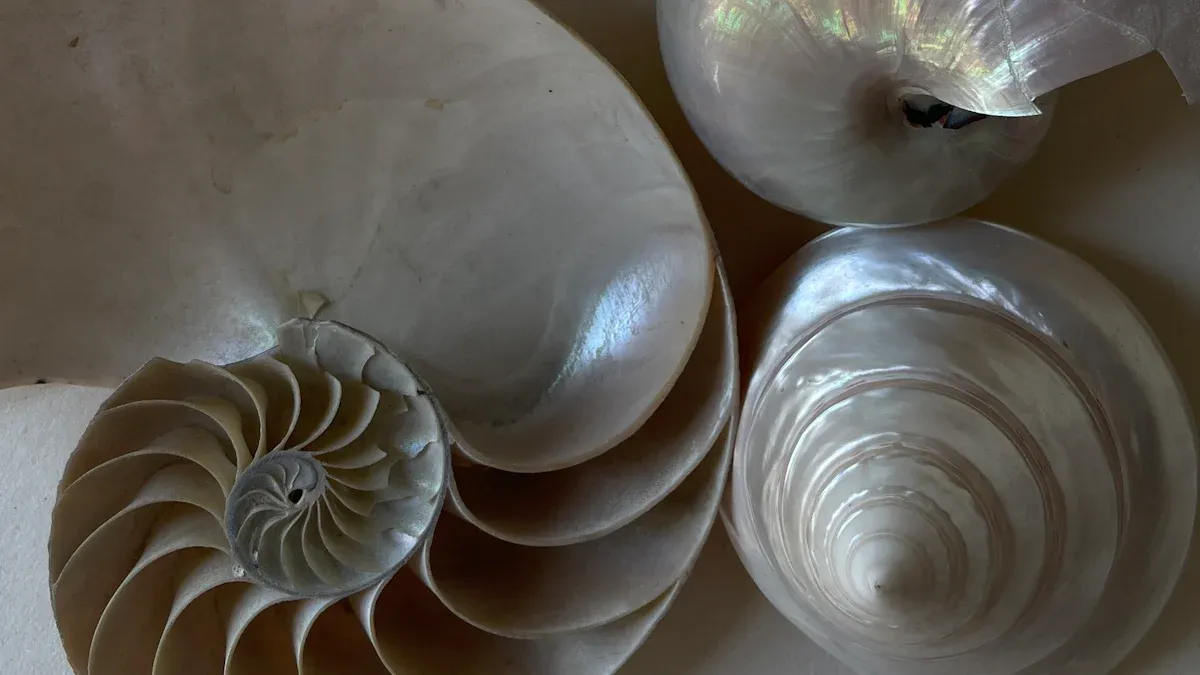
Formation process
A pearl forms when a mollusk, such as an oyster or mussel, reacts to an irritant that enters its shell. To protect itself, the mollusk surrounds this intruder with successive layers of mother-of-pearl. This process can last several months or even years, depending on the size and quality of the pearl.
Here are some interesting figures about pearl production:
An artisan can produce about 13,000 high-quality pearls per year.
Each pearl weighs an average of 10 grams.
Production also generates waste, accounting for about 70% of the total weight of the materials used.
This meticulous work, both natural and sometimes assisted by man, gives birth to unique and precious pearls.
Types of pearls: natural, cultured, freshwater, saltwater
Pearls come in several categories, each with its own characteristics:
Natural pearls: They form without human intervention and are extremely rare.
Cultured pearls: These pearls are created by inserting a nucleus into the mollusk, which speeds up the process.
Freshwater pearls: Coming from mollusks living in freshwater, they offer a great variety of shapes and colors.
Saltwater pearls: Cultivated in marine environments, they include famous varieties such as Tahitian and South Sea pearls.
Difference between natural pearls and cultured pearls
Natural pearls form without any human intervention, which explains their rarity and high cost. On the other hand, cultured pearls, which represent more than 90% of the market, are more accessible and available in a wide variety of sizes and colors.
Consumers often prefer cultured pearls for their affordable price and consistent quality. Natural pearls, although rare, remain prized for their unique character and fascinating history.
Mother-of-pearl vs. pearls: a comparison
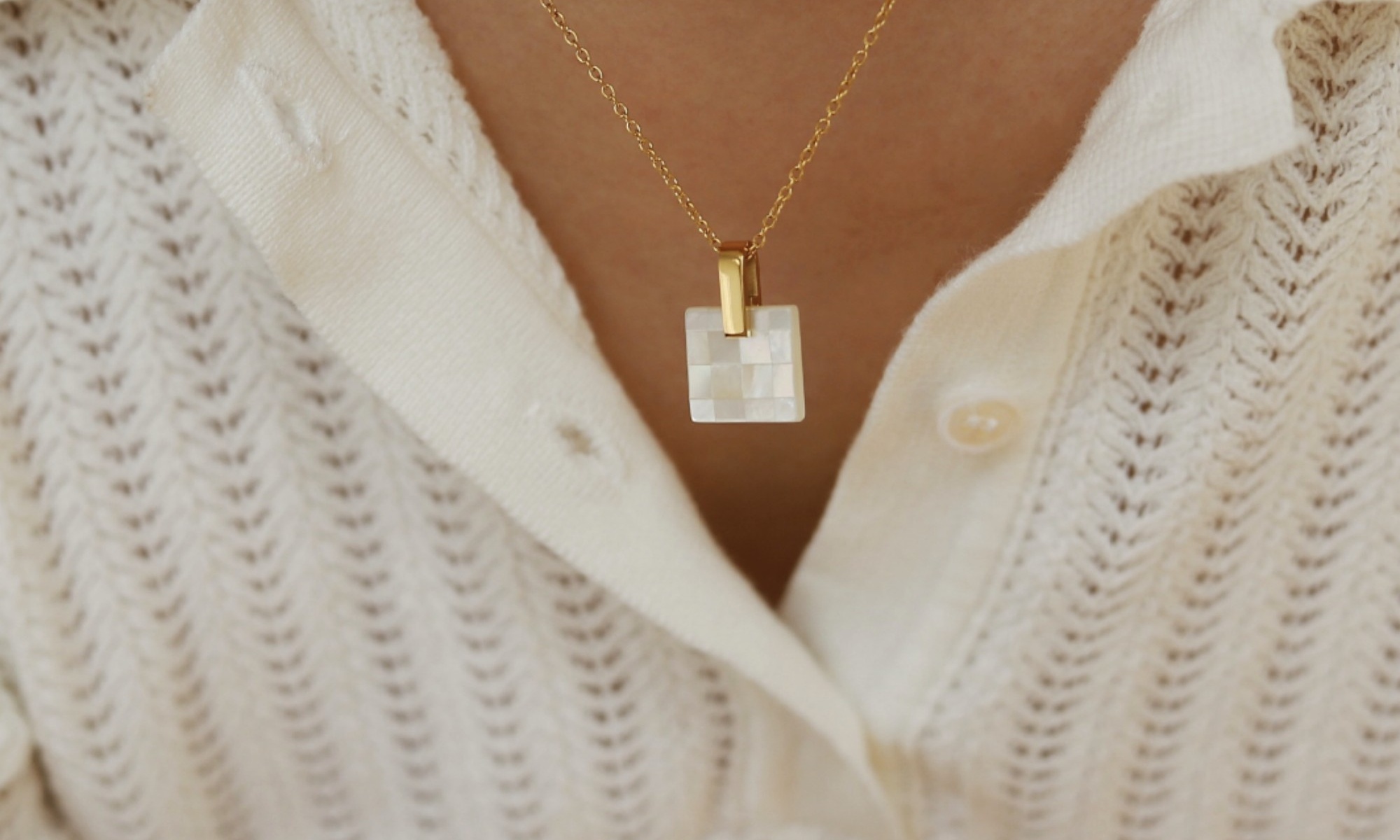
Structure and composition
The structure and composition of mother-of-pearl and pearls differ significantly. Mother-of-pearl, extracted from the shells of certain mollusks, consists of thin layers of calcium carbonate crystals organized in a network of organic matter. This unique structure gives it its iridescent luster and strength.
Pearls, whether natural or cultured, share a similar base with mother-of-pearl. However, their formation involves a distinct process. A pearl develops when layers of mother-of-pearl surround an intruder, such as a grain of sand or a nucleus introduced by man. Cultured pearls, for example, often have an artificial nucleus, which gives them a more regular shape.
Here is a comparison table to better understand these differences:
Characteristics |
Mother-of-pearl |
Freshwater pearl |
Cultured pearl |
|---|---|---|---|
Source |
Shells of certain mollusks |
Freshwater pearl mussels |
Saltwater mollusks, such as oysters |
Formation |
Natural |
Natural or man-made |
Man-made |
Structure |
Juxtaposition of layers of calcium carbonate crystals and organic matter |
Layers of mother-of-pearl around a natural or man-made intruder |
Layer of mother-of-pearl surrounding an artificial nucleus |
Size and shape |
Cut into different sizes and shapes |
Irregular, generally smaller than cultured pearls |
Round and uniform, generally larger than freshwater pearls |
These distinctions in structure explain why mother-of-pearl is often used for inlays, while pearls are prized for their spherical shape.
Appearance and aesthetics
The appearance of mother-of-pearl and pearls plays a key role in their use in jewelry. Mother-of-pearl stands out for its iridescent luster, which changes depending on the angle of the light. It offers a color palette ranging from pearlescent white to deep blue, with shades of pink and green. This variety makes it an ideal choice for modern and elegant designs.
Pearls, on the other hand, are characterized by their smooth surface and soft shine. Freshwater pearls often feature irregular shapes and varied colors, such as pink, purple, or blue. Cultured pearls, which are more uniform, display classic shades such as white, black, or gold. Their timeless aesthetic is perfectly suited for sophisticated and traditional jewelry.
In summary, if you are looking for jewelry with changing and modern reflections, mother-of-pearl is an excellent choice. For a classic and refined look, pearls remain unbeatable.
Cost and value
The cost and value of mother-of-pearl and pearl jewelry vary depending on several factors. Mother-of-pearl, although elegant, is generally more affordable. It is often used for costume jewelry or decorative accessories.
Pearls, on the other hand, are more valuable. Natural pearls, which are extremely rare, reach high prices. Cultured pearls, which are more accessible, offer an excellent compromise between quality and cost. Freshwater pearls, which are less expensive than saltwater pearls, are suitable for more modest budgets.
In terms of value, cultured pearls and natural pearls surpass mother-of-pearl due to their rarity and formation process. However, mother-of-pearl remains an affordable and aesthetic option for those who wish to add a touch of elegance to their jewelry collection.
Use in jewelry
Mother-of-pearl and pearls play distinct roles in the creation of jewelry. You can find them in a variety of designs, ranging from modern pieces to classic styles. Their use depends on their unique characteristics and the desired effect.
Mother-of-pearl jewelry
Mother-of-pearl is often used for inlays and decorations. It adds a subtle and elegant touch thanks to its iridescent reflections. You can see it in rings, bracelets, or pendants. Artisans cut it into thin plates to incorporate it into complex designs.
Here are some examples of use:
Watches and accessories: Mother-of-pearl watch dials add a discreet sophistication.
Costume jewelry: Mother-of-pearl earrings and necklaces are perfect for a modern look.
Decorative objects: Mother-of-pearl often adorns jewelry boxes or photo frames.
Mother-of-pearl is ideal if you are looking for jewelry that reflects light and offers a contemporary aesthetic.
Pearl jewelry
Pearls, with their spherical shape and soft shine, are synonymous with refinement. They are often set on necklaces, earrings, or bracelets. Freshwater pearls, which are more affordable, are suitable for varied designs. Cultured pearls, on the other hand, are prized for their uniformity and quality.
Some ideas for pearl jewelry:
Classic necklaces: A strand of white pearls is timeless and elegant.
Drop earrings: Pearls add a touch of sophistication.
Delicate bracelets: Freshwater pearls offer an affordable and charming option.
Pearls are perfect for special occasions such as weddings or birthdays. They embody a timeless style that transcends generations.
Difference in use
The difference between mother-of-pearl and pearls in jewelry lies mainly in their appearance and function. Mother-of-pearl is often used for modern designs and inlays. Pearls, on the other hand, are preferred for their shape and symbolism. If you want jewelry that attracts attention with its reflections, choose mother-of-pearl. If you prefer a classic and elegant accessory, opt for pearls.
💡 Tip: Think about the occasion and your personal style before choosing between mother-of-pearl and pearls. Both materials offer unique possibilities to express your personality.
How to choose between mother-of-pearl and pearls for your jewelry?
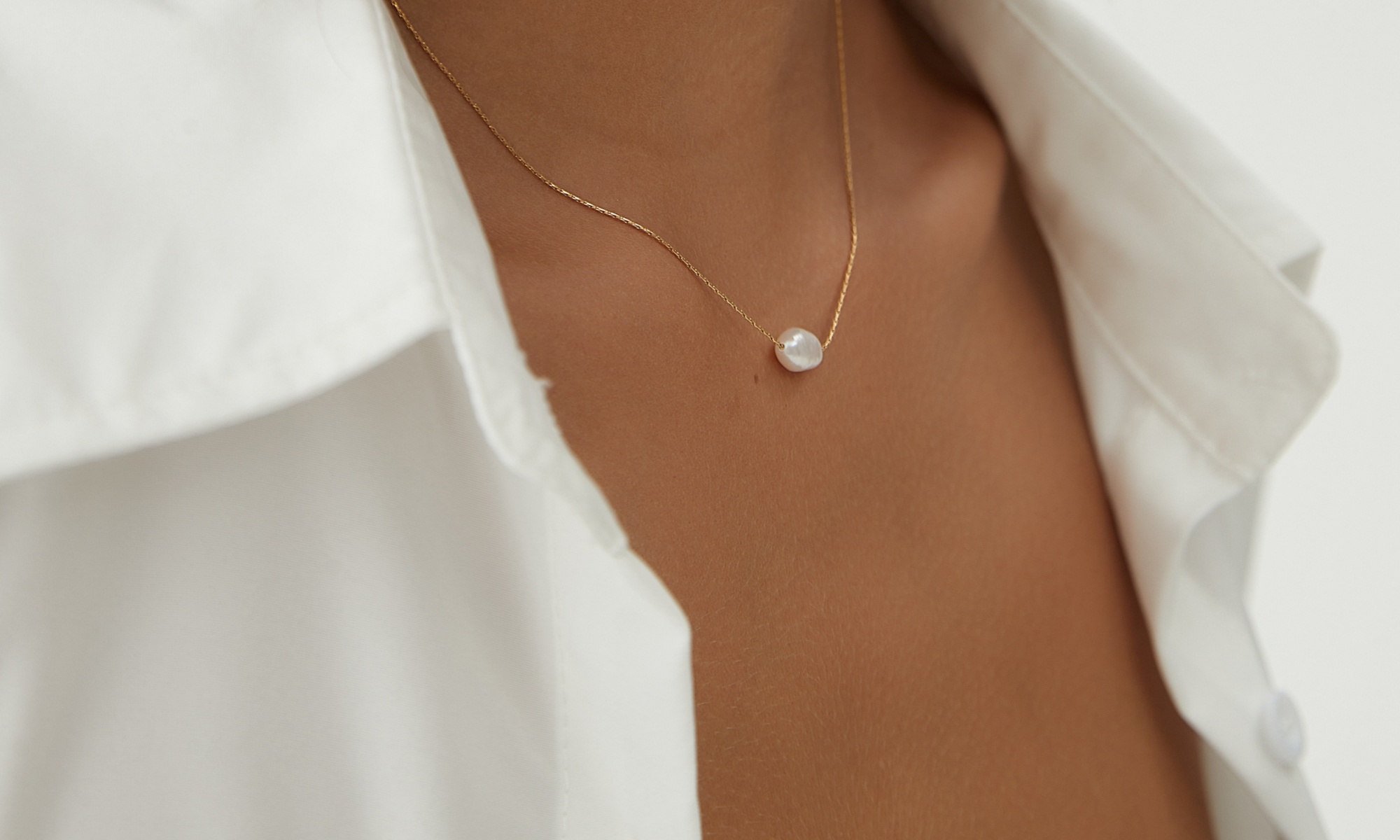
Style and occasion
The choice between mother-of-pearl and pearls often depends on the occasion and the style you wish to adopt. If you are looking for jewelry for a formal event, such as a wedding or an elegant evening, pearls are an excellent choice. Their classic and refined appearance pairs perfectly with sophisticated outfits.
For a more casual or modern look, mother-of-pearl offers an interesting alternative. Its iridescent reflections and varied colors blend well with contemporary designs. A mother-of-pearl ring or a minimalist pendant can complete an everyday outfit while adding a touch of elegance.
💡 Tip: Think about your wardrobe and the occasion before choosing. Pearls are better suited for traditional events, while mother-of-pearl adapts to more versatile styles.
Budget and durability
Your budget plays a key role in your decision. Mother-of-pearl is generally more affordable than pearls, making it an ideal option if you are looking for elegant jewelry without overspending. It is also durable and withstands daily wear well, making it a practical choice for accessories you will wear often.
Pearls, on the other hand, vary considerably in price. Natural pearls are rare and expensive, while cultured pearls, especially freshwater pearls, are more accessible. However, they require more careful maintenance to preserve their luster.
🛠️ Practical advice: If you are looking for jewelry for everyday use, opt for mother-of-pearl. For a precious and symbolic piece, pearls are an investment worth making.
Advantages of mother-of-pearl: understated elegance
Mother-of-pearl captivates with its subtle charm and versatility. Its changing reflections capture the light in a unique way, adding a touch of sophistication without being too flashy. This material is perfectly suited for those who prefer discreet but elegant jewelry.
In addition to its aesthetics, mother-of-pearl is lightweight and comfortable to wear. It easily integrates into modern designs, such as watches, earrings, or bracelets. If you like accessories that stand out for their simplicity and originality, mother-of-pearl is an excellent choice.
✨ Key takeaway: Mother-of-pearl combines beauty and practicality. It is ideal for jewelry that reflects your style while remaining affordable.
The benefits of pearls: timeless elegance
Pearls embody a timeless elegance that transcends generations. Their natural beauty and symbolism make them a popular choice for jewelry. Here is why they deserve a special place in your collection.
1. A classic and universal aesthetic
Pearls, with their smooth surface and soft luster, complement every style. Whether you are wearing a modern or traditional outfit, they add a touch of sophistication. Their perfectly spherical shape and subtle shades, such as white, pink, or black, harmonize with all colors and textures.
✨ Tip: A white pearl necklace is a must-have accessory to complete an evening dress or an elegant suit.
2. A symbol of purity and luxury
For centuries, pearls have symbolized purity, wisdom, and luxury. They were once reserved for royalty and the elite. Today, they remain a sign of refinement and good taste. Giving a pearl jewelry piece is a meaningful gesture, often associated with important occasions such as weddings or anniversaries.
3. Exceptional durability
Quality pearls, when properly cared for, retain their luster for decades. They stand the test of time, making them a valuable investment. Unlike other materials, they never go out of style.
🛠️ Practical tip: Store your pearls in soft fabric and avoid chemicals to preserve their natural shine.
4. A variety for every taste
Pearls offer impressive diversity. Freshwater pearls, with their unique shapes and varied colors, are suitable for creative designs. Cultured pearls, which are more uniform, appeal to those who appreciate perfection. Tahitian and South Sea pearls, with their exotic shades, add a touch of originality.
Pearl type |
Main characteristics |
Ideal for |
|---|---|---|
Freshwater pearls |
Irregular shapes, varied colors |
Modern and affordable jewelry |
Cultured pearls |
Uniform, classic luster |
Elegant and sophisticated jewelry |
Tahitian pearls |
Dark and mysterious shades (gray, black, green) |
Bold and unique jewelry |
South Sea pearls |
Large sizes, golden or silver colors |
Luxurious and prestigious jewelry |
5. Sentimental value
Pearls are not just jewelry. They tell a story. Each pearl is unique, just like the memories it represents. Wearing pearls means wearing a piece of history and nature.
💡 Key takeaway: Pearls are much more than just an accessory. They embody emotions, traditions, and timeless style.
By choosing pearls, you are opting for jewelry that combines beauty, symbolism, and durability. Their timeless elegance makes them a perfect choice for marking the important moments in your life.
Mother-of-pearl and pearls offer unique options for enhancing your jewelry. Each material has distinct characteristics that meet different needs.
Mother-of-pearl: ideal for an modern and affordable style.
Pearls: perfect for timeless elegance and special occasions.
💡 Tip: Consider your budget, style, and the occasion before choosing. Explore the different options to find the jewelry that reflects your personality and brightens your outfits.
With a little thought, you will find the perfect piece to complete your collection.
FAQ
What makes natural pearls so rare?
Natural pearls form without human intervention. This process depends on specific conditions in nature, which makes them extremely rare. Less than 1% of the pearls on the market are natural.
💡 Tip: If you are looking for a natural pearl, ask for a certificate of authenticity.
Is mother-of-pearl as durable as pearls?
Mother-of-pearl is durable but slightly more fragile than pearls. It withstands daily wear well, but avoid impacts and chemicals to preserve its luster.
🛠️ Practical tip: Store your mother-of-pearl jewelry in a box lined with soft fabric.
How do I care for my pearl jewelry?
Clean your pearls with a soft, damp cloth. Avoid perfumes, creams, and chemicals. Store them separately to prevent scratches.
✨ Key takeaway: Pearls like to be worn. Their luster improves with the natural moisture of your skin.
Is mother-of-pearl jewelry suitable for special occasions?
Yes, mother-of-pearl offers a subtle elegance that is perfect for events such as dinners or meetings. Its iridescent reflections add a unique touch to your outfit.
💡 Tip: Pair a mother-of-pearl pendant with a simple dress for a chic and modern look.
What is the best option for a gift?
Pearls symbolize luxury and purity, making them ideal for special occasions such as a wedding. Mother-of-pearl, which is more affordable, is suitable for modern and versatile gifts.
🎁 Suggestion: Give a pearl necklace for a birthday or a mother-of-pearl ring as a casual gift.


