



You want to get ear piercings, but you're still hesitating? Take the time to learn about them to avoid complications. Infections can occur early or late, sometimes leading to serious conditions such as endocarditis or septic shock. You may also experience allergic reactions to certain metals, particularly nickel, gold, or titanium. To ensure your safety and make the most of your new look, always consult a qualified professional.
⚠️ The most common risks:
Ear infections (35% of cases)
Nickel contact dermatitis
Allergic reactions to gold or titanium
Key Points
Learn about the risks before getting pierced. Infections and allergies can occur. Always consult a qualified professional.
Choose the right type of piercing based on your pain tolerance and style. The lobe is the least painful, while cartilage piercings can be more intense.
Take care of your piercing with a strict hygiene routine. Clean it twice a day to prevent infections and promote healing.
Select jewelry made from safe materials such as titanium or surgical steel. Avoid nickel jewelry to prevent allergies.
Watch for signs of infection. Consult a professional if you notice persistent redness or abnormal discharge.
Ear Piercing Names
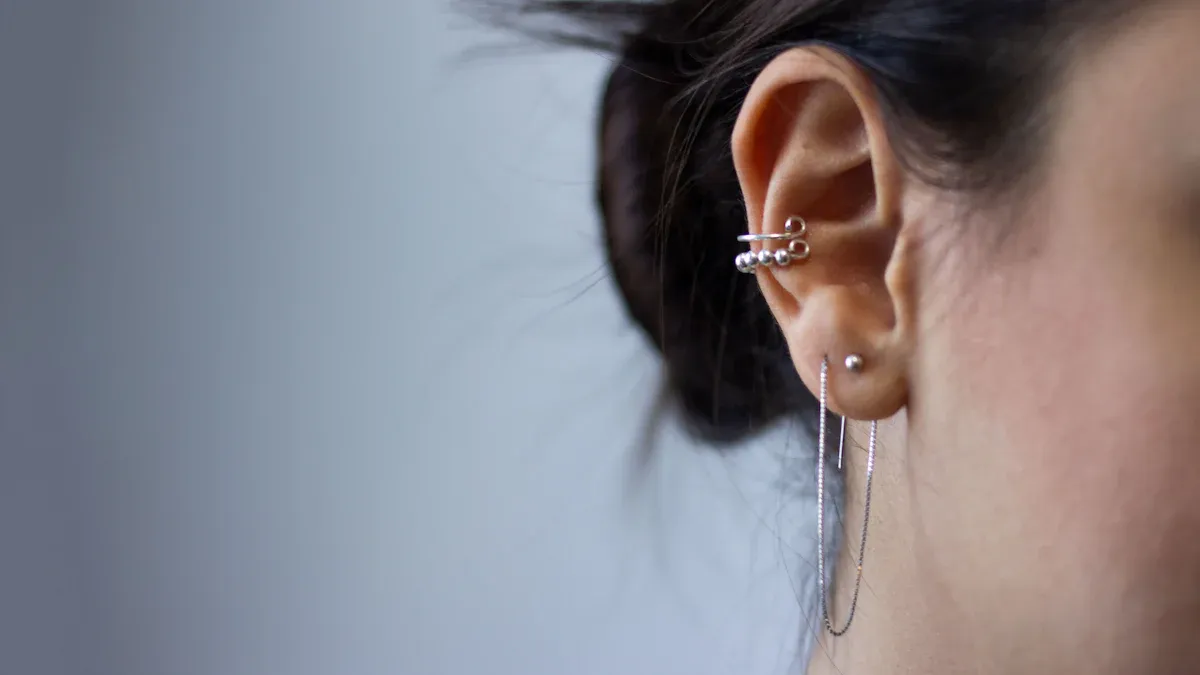
You want to personalize your style? Ear piercings offer incredible variety. Each location has its own benefits, sensations, and suitable jewelry. Discover the characteristics of each type to choose the one that's right for you.
Lobe
The lobe piercing remains the most popular. This piercing is located on the lower, fleshy part of the ear.
Pain: Very mild, often rated 2/10. You'll feel only a slight pinch, which is almost painless.
Healing: Fast, taking between 1 and 2 months.
Suitable jewelry: You can wear studs, hoops, or huggie hoops.
Characteristics: This piercing may improve vision by stimulating certain points. It is suitable for all ages and allows for multiple combinations.
Helix
The helix piercing is located on the upper outer cartilage.
Pain: Moderate, around 5/10. You'll feel a sharp, hot pinch, followed by distinct pressure.
Healing: Take your time, as healing takes between 3 and 9 months.
Suitable jewelry: Professionals recommend ASTM F-136 titanium or 14-18 karat gold labrets, with an internal screw closure and a flat or round base. Avoid hoops at first to promote healing. The standard size is 1.2 mm thick and 6 to 8 mm long.
Characteristics: This piercing suits most body types and offers a modern look.
Anti-Helix
The anti-helix is located on the cartilage just in front of the helix, on the outside of the ear.
Pain: Moderate to intense, as cartilage is dense.
Healing: Allow between 6 and 12 months.
Suitable jewelry: You can choose short bars or hoops made of titanium or surgical steel.
Characteristics: This piercing targets the lumbar area and may help relieve back pain. Watch out for irritation, infections, and adverse reactions to the jewelry.
Conch
The conch piercing is located in the center of the ear, on the hollow cartilage.
Pain: Moderate to intense, depending on your pain tolerance.
Healing: Be patient, as healing takes between 3 months and 1 year, often around 6 to 8 months.
Suitable jewelry: Titanium or medical-grade steel hoops and labrets are ideal.
Characteristics: This piercing draws attention and allows you to wear original jewelry.
Daith
The daith is located inside the cartilage, near the ear canal.
Pain: Moderate, with brief pressure.
Healing: Between 6 and 12 months.
Suitable jewelry: Choose a titanium clicker or hinged hoop to prevent allergies. Select a slightly larger hoop at first to accommodate natural swelling.
Characteristics: This mid-ear piercing fits perfectly into the cartilage fold. You can opt for curved bars after healing.
Tragus
The tragus is located on the small piece of cartilage in front of the ear canal.
Pain: Moderate, with a quick pinch.
Healing: Between 3 and 9 months.
Suitable jewelry: Titanium or gold studs, labrets, and hoops are perfect.
Characteristics: This piercing improves daily energy and muscle tone. It allows you to personalize your style, from subtle to bold.
Rook
The rook is located on the middle ear cartilage, just above the daith.
Pain: More intense than a lobe piercing, often described as brief pressure or a pinch.
Healing: Long, taking between 6 and 12 months.
Suitable jewelry: Curved bars or titanium hoops are recommended.
Characteristics: This piercing may help manage stomach problems. The pain depends on your pain tolerance and the piercer's technique.
Snug
The snug is located on the inner cartilage, between the conch and the anti-helix.
Pain: Intense, as the cartilage is thick.
Healing: Between 6 and 12 months.
Suitable jewelry: Classic barbells, circles, segmented hoops, curved bars, and circular bars. Recommended materials are bioflex, surgical steel, titanium, and gold.
Characteristics: This mid-ear piercing offers a unique look and requires suitable jewelry for optimal comfort.
Industrial
The industrial piercing connects two points on the cartilage with a long straight bar.
Pain: Moderate to intense, as two areas are pierced.
Healing: Between 6 and 12 months.
Suitable jewelry: A straight bar made of titanium or surgical steel, sized to fit your ear and its anatomy.
Characteristics: Not all ears can accommodate a balanced industrial piercing. Consult a professional to check feasibility and choose the ideal size.
📝 Tip: Take the time to think about the placement and jewelry. Ear piercings are categorized by their location on the middle, top, outside, bottom, or inside of the ear. Each type has its own advantages and limitations. You can mix several piercings for a personalized effect, but always respect the healing process and the piercer's advice.
Piercing Type |
Location |
Pain (out of 10) |
Healing |
Suitable jewelry |
|---|---|---|---|---|
Lobe |
Bottom |
2 |
1-2 months |
Stud, hoop |
Helix |
Top |
5 |
3-9 months |
Labret, hoop |
Anti-Helix |
Outside |
6 |
6-12 months |
Bar, hoop |
Conch |
Inside |
6 |
6-12 months |
Hoop, labret |
Daith |
Middle |
5 |
6-12 months |
Hoop, banana |
Tragus |
Front |
4 |
3-9 months |
Stud, hoop |
Rook |
Middle |
6 |
6-12 months |
Curved bar |
Snug |
Middle |
7 |
6-12 months |
Barbell, hoop |
Industrial |
Top |
6 |
6-12 months |
Straight bar |
You want a unique look? Ear piercings allow you to reveal your personality. Take the time to choose the right placement and suitable jewelry, and respect the healing process. Always consult a professional to ensure safety and style.
Pain and healing
Lobe vs cartilage
You want to know if a piercing really hurts? It all depends on the chosen area. The lobe, composed of skin and fatty tissue, remains the least painful part. You'll feel a slight pinch, and the pain will disappear almost immediately. Healing is fast because blood circulates well in this area. In contrast, cartilage, as with a conch piercing, causes more intense pain. You'll feel sharp pressure, sometimes a small crack. This sensation subsides quickly, but you may feel discomfort for several days. Cartilage heals more slowly because it receives less blood. You must therefore be patient and vigilant.
💡 Tip: If you fear pain, start with the lobe. You can then explore other more original ear piercings.
Summary table
Here is a simple table to compare pain and healing according to the type of piercing:
Area |
Pain |
Healing |
|---|---|---|
Lobe |
Mild (2/10) |
1 to 2 months |
Cartilage (Helix…) |
Moderate to intense (5-7/10) |
3 to 12 months |
This table helps you choose the piercing that suits your pain tolerance and lifestyle.
Healing factors
Several elements influence the healing of your piercing. You need to know them to avoid unpleasant surprises:
The choice of material plays a key role. Some metals trigger allergies or inflammation and slow down healing.
Inappropriate care, such as cleaning too frequently or using harsh products, damages the skin.
An infection can occur. Watch for signs such as excessive redness or swelling.
Take care of your piercing and follow your piercer's advice. You'll enjoy your new ear piercings sooner, without complications.
Choosing your jewelry
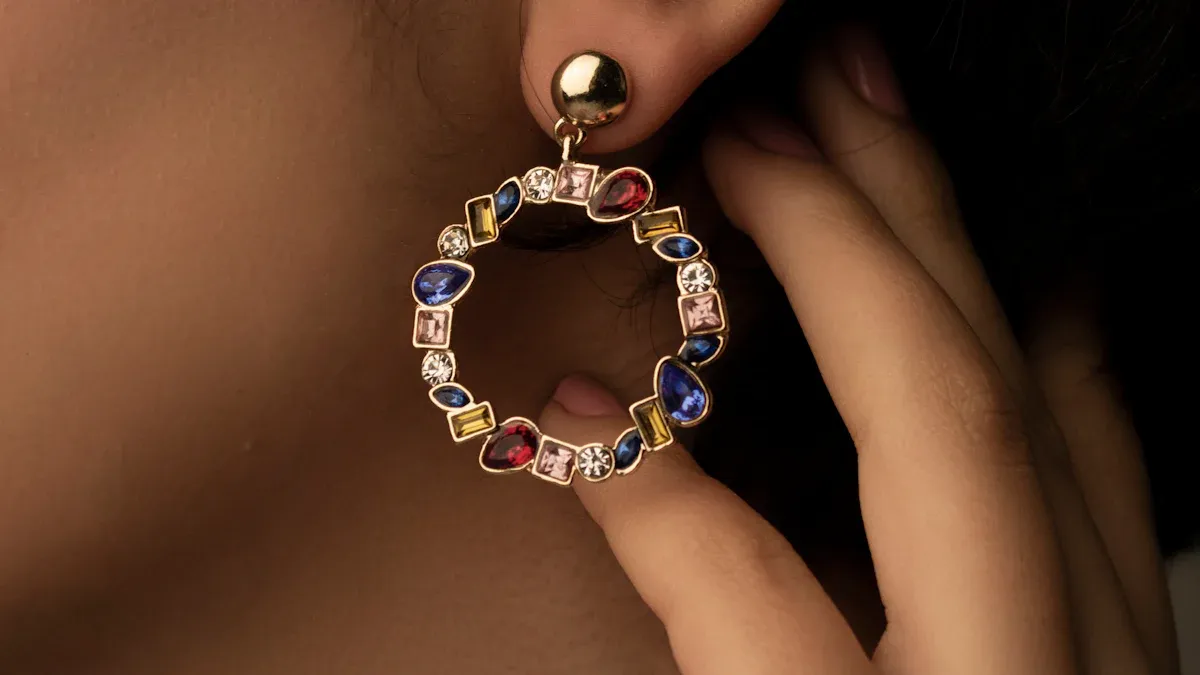
You want your piercing to be beautiful, comfortable, and risk-free? The choice of jewelry plays an essential role in the success of your experience. Discover how to select the best jewelry for your ear piercings.
Recommended materials
To avoid allergies and ensure fast healing, you should prioritize safe materials. European standards recommend several options:
316LMV surgical steel
G23 and G5 titanium
Bioflex
These materials reduce the risks of irritation and infection. You thus protect your skin and enjoy your piercing without worry.
💡 Tip: Avoid costume jewelry or nickel for the first piece of jewelry. They often cause allergic reactions.
Size and shape
The size and shape of the jewelry influence your comfort and style. You must adapt your choice to the shape of your face and the pierced area.
Oval or long face: choose round hoops or huggie hoops.
Round face: prefer graphic, triangular, or square piercings.
Square face: opt for soft and rounded shapes.
For each type of piercing, you have several options:
Hoops are suitable for the lobe, helix, conch, rook, and daith.
The barbell resembles an open hoop, often adorned with a small ball.
Studs offer a subtle look with a flat part or a ball behind the ear.
Test different shapes to find the one that flatters you the most.
Quality and standards
The quality of the jewelry guarantees your safety. You must check for certifications:
ASTM F136 for titanium
ASTM F138 for surgical steel
ISO 10993 and ISO 5832 for biocompatibility
Jewelry must comply with European and American standards, such as European Directive 94/27/EC. Certified jewelry reduces the risk of allergies and infection. You invest in your health and can enjoy your ear piercings with complete confidence.
Care and mistakes to avoid
Hygiene routine
Want to keep your piercing healthy? Adopt a strict hygiene routine. Professionals recommend cleaning the area twice a day during the initial healing phase, then once a day or every two days. Here’s how:
Rinse the area with warm water to remove residue.
Gently pat dry with a clean towel or let it air dry.
Never apply healing cream or lotion to the skin.
Avoid alcohol or hydrogen peroxide, as they irritate the wound.
💡 Tip: Regular cleaning protects against infection and speeds up healing.
Habits to avoid
Certain habits can endanger your piercing. You must avoid them:
Never touch your piercing without washing your hands.
Avoid tight clothing that rubs against the area.
Do not change your jewelry without cleaning it.
Avoid unprofessional piercers.
Watch for signs of infection, such as fever or pain.
Do not choose jewelry that is too large or unsuitable.
Promoting healing
Want it to heal quickly? Use natural products recommended by dermatologists:
Natural oils (jojoba, tea tree): promote regeneration.
Honey: antibacterial, it soothes irritation.
Aloe vera: moisturizes and repairs the skin.
Apply a small amount of these products, then rinse after a few minutes. Also opt for mild antiseptics such as Dosiseptine or Diaseptyl.
When to see a professional
Pay close attention to how your piercing heals. See a professional if you notice:
Persistent redness or swelling that does not go away.
Yellow, green, or foul-smelling discharge.
Pain that lasts for several weeks.
A feeling of rejection or unusual discomfort.
An area that is hot, very sensitive, or deteriorating.
🚨 Do not wait for the situation to worsen. Seeking medical advice protects your health and your style.
Before you get started, keep these essential points in mind:
Prepare yourself mentally to better manage the pain.
Always choose a qualified piercer to ensure hygiene and safety.
Understand possible reactions such as inflammation or irritation.
Follow a strict care routine to prevent infection.
A professional will help you choose the right jewelry and provide thorough follow-up. Do not hesitate to ask questions or share your experience on specialized forums such as Wildcat or Tattoo-bootik. Take care of yourself and fully enjoy your new style!
FAQ
Does an ear piercing hurt?
You will feel a quick pinch. The pain remains manageable. You can handle this sensation. Choose a lobe piercing to start. You will build confidence before trying cartilage.
Can I change my jewelry right away?
No, you must wait until it has completely healed. Changing it too soon risks infection. Ask your piercer for advice before changing your jewelry.
What care should I use after getting pierced?
Clean it twice a day with a saline solution. Do not touch your piercing without washing your hands. Avoid harsh products. You will speed up healing and avoid complications.
Can I exercise after an ear piercing?
Yes, you can continue exercising. Protect your ear from impacts and sweat. Use a bandage if necessary. You can enjoy your activity without risk.
What should I do if my piercing gets infected?
Watch for signs: redness, pain, discharge. See a professional quickly. Do not wait. You will protect your health and your style.


