


Want to enhance your ear without getting a piercing? Choosing an ear cuff without a piercing is becoming a trendy and thoughtful choice. More and more people are adopting this alternative, as it allows you to add style without pain or permanent commitment.
The ear cuff simply attaches to the cartilage and blends into any ear jewelry arrangement.
It creates original and voluminous effects, even without multiple piercings.
Source |
Study type |
Details |
|---|---|---|
Statista 2026 |
Market study |
The costume jewelry market grew by 8.3%, supported by ear cuffs without piercings. |
Pinterest 2025 |
Research survey |
Searches for "earrings without piercings" increased by 127%. |
Bijoux Lili Rose |
Trend analysis |
Many brands launched ear cuff collections in response to demand. |
You should also think about comfort, ergonomics, safety, and aesthetics. These are the essential criteria for finding a model that adapts to the shape of your ear and your complexion.
Key Points
Choose an ear cuff that fits the shape of your ear well to avoid discomfort and pain.
Opt for quality materials such as 925 silver and hypoallergenic options to avoid allergies.
Test several sizes and styles to find the model that suits you best and ensures optimal hold.
The ear cuff offers painless styling freedom, allowing you to change your look easily every day.
Match the color of your ear cuff to your complexion to enhance your skin tone and assert your style.
Choosing an ear cuff without a piercing: the key criteria
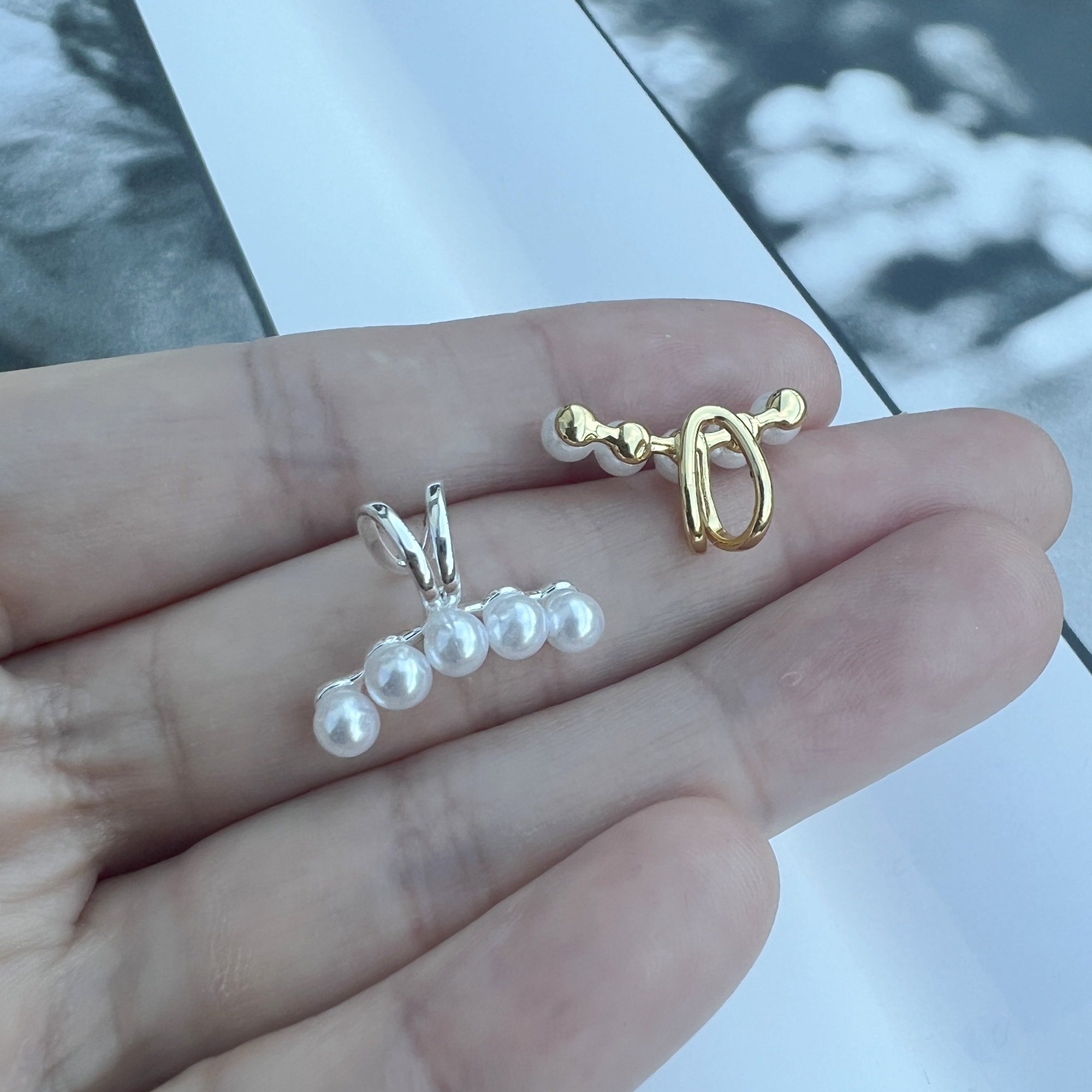
Comfort and safety
When you want to choose an ear cuff without a piercing, you must think about comfort and safety. An ill-fitting piece of jewelry can bother you all day. You may sometimes feel pressure or pain if the model is not designed for your anatomy. You should avoid this problem by selecting a cuff that fits the shape of your ear well.
Tip: Test the jewelry for a few minutes before buying it. Check that it stays securely in place without squeezing you.
You should also protect yourself against allergic reactions. Poor-quality materials cause redness, itching, or even allergies. You avoid these risks by choosing safe and recognized materials.
Poor-quality materials can cause redness on the skin.
They can cause itching.
Allergies can occur, making the use of these materials problematic.
Material quality
Material quality plays an essential role when you want to choose an ear cuff without a piercing. You should prioritize 925 silver and hypoallergenic materials. 925 silver contains 92.5% pure silver. This metal offers an elegant shine and resists the test of time well. Hypoallergenic materials are selected to minimize the risk of allergies. They avoid nickel, a common allergen.
925 silver is 92.5% pure, offering an elegant shine.
Hypoallergenic materials are carefully selected to minimize the risk of allergies, notably by avoiding nickel, a common allergen.
This ensures a pleasant and safe experience. You keep your ear healthy and enjoy the style without worry.
Ergonomic fit
An ergonomic fit guarantees you comfortable wear all day. You should choose an ear cuff without a piercing that adapts to the shape of your ear. An ergonomic model does not slip and does not squeeze too tightly. You avoid marks and discomfort. You can wear your jewelry for a long time without feeling pain.
Tip: Take the time to try several sizes and shapes. You will find the one that suits you best.
When you want to choose an ear cuff without a piercing, you must check the fit. This ensures optimal hold and allows you to enjoy a trendy look without sacrificing your comfort.
Ear cuff or traditional piercing: the comparison
Pain and maintenance
You often wonder if an ear cuff without a piercing is really different from a traditional piercing. The answer is clear. You feel no pain with an ear cuff. You avoid the needle and the unpleasant sensation of piercing.
You can wear your jewelry as soon as you buy it, without waiting for healing.
Look at the main differences:
Traditional piercing, such as the conch or snug, causes variable pain depending on the area. For example, the snug reaches a pain level of 7/10.
You must wait between 6 and 8 months for a conch piercing to heal. During this time, you must clean the area every day.
The ear cuff does not create any wound. You do not need specific maintenance. You avoid infections and complications.
Risks and safety
You want to choose an ear cuff without a piercing to limit risks. A traditional piercing exposes your ear to infections, irritation, and sometimes allergic reactions. You must monitor healing and avoid contact with water or chemicals.
The ear cuff protects you. You do not risk medical complications. You can change models without worry.
Modularity and style
You are looking to personalize your look. The ear cuff offers you total freedom. You can change your style every day. You add or remove your jewelry according to your mood or outfit.
You combine several ear cuffs to create a unique effect.
You choose different models for each part of the ear.
You adapt the color and shape to your face.
A traditional piercing remains fixed. You cannot easily remove it. You must wait for healing before changing jewelry. The ear cuff allows you to test various styles without commitment.
Adapting your ear cuff to the shape of your ear
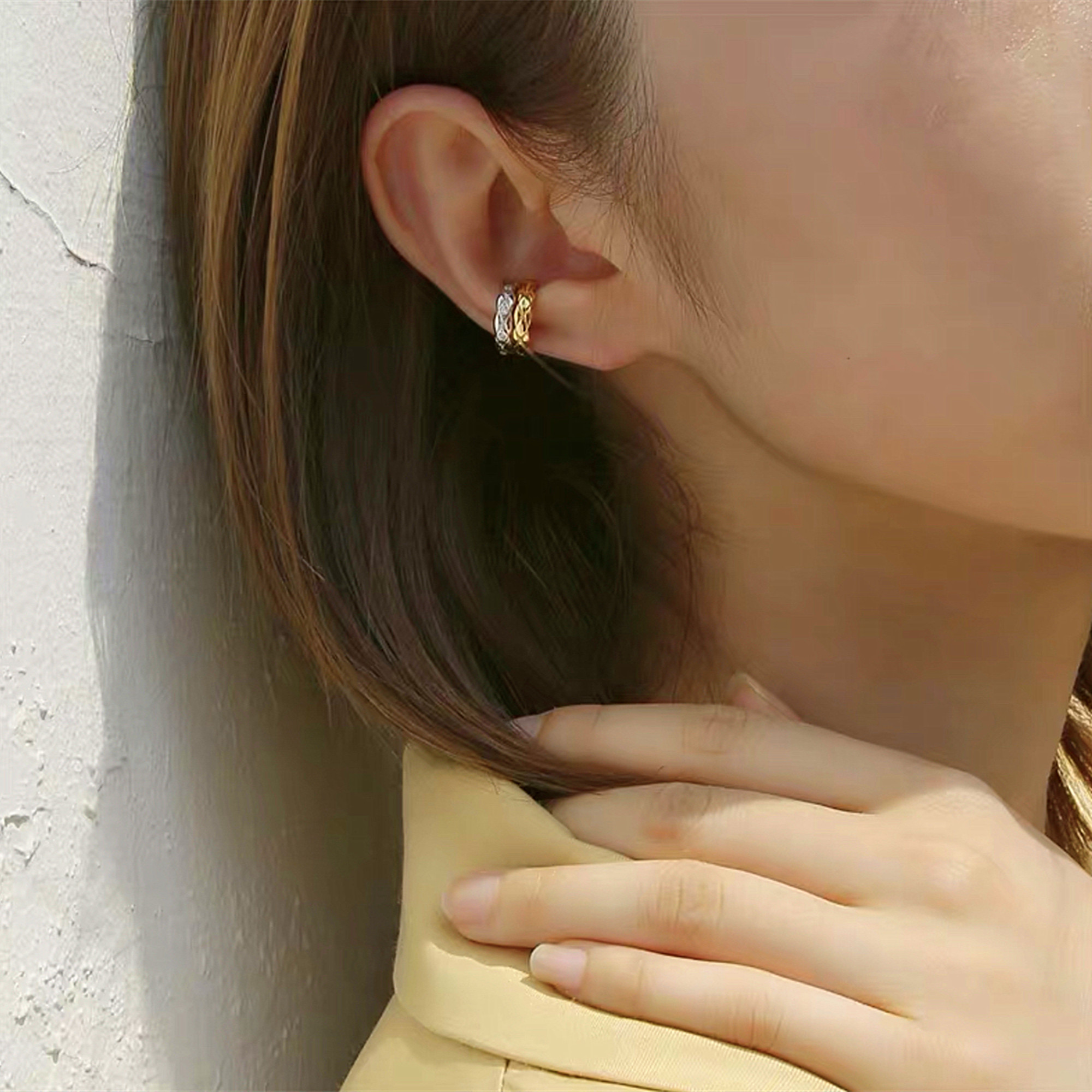
Styles according to the area (helix, cartilage, conch)
You can choose different ear cuff styles depending on the part of your ear. Each area offers a unique experience and a different aesthetic result.
Helix: You find thin and delicate models. They are placed on the upper edge of the ear. These ear cuffs add a discreet and elegant touch.
Middle cartilage: You opt for more voluminous or textured designs. This area supports more imposing jewelry. You create a graphic or bold effect.
Conch: You select wide or enveloping ear cuffs. They cover a central part of the ear. This style draws attention and gives character to your look.
Tip: Try several styles to see which one highlights the shape of your ear. You can mix models for a personalized effect.
Size and hold
You must choose the ideal size to ensure optimal hold without discomfort. An ear cuff that is too large slips easily. A model that is too tight creates unpleasant pressure.
Here are some tips for finding the right balance:
Choose a model suited to the width of your ear. This avoids the risks of slipping or pain.
Position the jewelry on a stable area, such as the middle cartilage or the conch. You ensure a reliable hold.
Delicately adjust your ear cuff. You tighten it just enough so that it stays in place, without applying excessive pressure.
Note: Take the time to try on your ear cuff before buying it. You check the comfort and stability on several areas of your ear.
You can thus wear your ear cuff all day without discomfort. You enjoy jewelry that adapts perfectly to your anatomy and style.
Ear cuff color and complexion
Choosing the color of your ear cuff influences your style and enhances your skin. You should observe your skin tone to select the metal that suits you. 2026 trends show that ear cuffs come in bold designs, with various materials such as unique pearls or black diamonds. You can transform your classic look into an ultra-modern style thanks to these innovative shades.
Gold for warm skin
If you have a warm complexion, you often notice golden or peach undertones on your skin. Yellow or rose gold illuminates your face and accentuates the warmth of your skin tone. You can choose gold ear cuffs for a luminous and natural effect.
Tip: Place your jewelry near the light. You observe if gold enhances the radiance of your skin.
Yellow gold suits skin with golden undertones.
Rose gold brings a soft and refined touch.
Matte or shiny finishes adapt to your style.
Silver for cool skin
Do you have a cool complexion? You notice pink undertones on your skin. Your veins appear blue or purplish. Jewelry in silver, platinum, or white gold enhances this type of skin.
You can choose a silver ear cuff for an elegant and modern effect.
Silver enhances pink undertones.
Platinum and white gold offer a subtle shine.
Minimalist designs accentuate the freshness of your skin tone.
Mixing finishes
Want to dare an original look? Mixing gold and silver is becoming trendy. You can wear several ear cuffs of different colors without fearing bad taste.
Tip: Choose jewelry of the same style for a harmonious result.
Minimalist pieces make mixing metals easier.
You can pair a gold ear cuff with a silver model on the other ear.
Similar designs create visual unity.
You can thus adapt your ear cuff to your complexion and style. Current trends encourage creativity and innovation. You no longer need to follow classic rules: express your personality with varied colors and finishes.
Daily comfort and fit
Malleability and prolonged wear
A well-chosen ear cuff must remain comfortable from morning to night. You should prioritize a malleable model that adapts to the shape of your ear without applying excessive pressure. A piece of jewelry that is too tight can cause redness, tingling or even a pulsing sensation after a few minutes. Conversely, an ear cuff that is too loose risks slipping or falling without you realizing it. The goal is to find the right balance: the jewelry must hold without interfering with blood circulation.
Tip: Adjust your ear cuff in small steps. If you feel discomfort, loosen it by one millimeter. If the jewelry moves too much, tighten it very gently with dry hands.
To wear your ear cuff all day, choose hypoallergenic materials such as sterling silver or stainless steel. Avoid finishes containing nickel, lead, or cadmium. These metals can irritate the skin, especially during prolonged wear.
Here is how to adjust your ear cuff for optimal comfort:
Locate a thin area of the ear, often above the lobe.
Slide the jewelry on by tilting it at 45°, then straighten it.
Move it up to the firmer cartilage.
Adjust the pressure so that it holds without pinching.
Move your head, smile, talk: the jewelry should neither move nor hurt.
Ergonomic design
Ergonomic design plays a key role in daily comfort. You should choose an ear cuff suited to the size and anatomy of your ear. A well-designed model follows the natural curve of the cartilage and distributes pressure over a wide surface.
Prioritize jewelry with a rounded shape and smooth edges.
Opt for hypoallergenic materials to avoid any reaction.
Adjust the pressure gradually, never abruptly.
To position your ear cuff correctly, gently spread its ends and slide it onto the cartilage from top to bottom. Apply progressive pressure, not an abrupt tightening.
An ergonomic ear cuff allows you to forget it, even after several hours. You thus enjoy an assertive style without sacrificing your well-being.
To choose your ear cuff without a piercing properly, you must follow a few simple steps:
Observe the shape of your face and choose a model that creates a nice contrast.
Think about your hairstyle: it can highlight your ear cuff.
Check that your cuff matches your other accessories.
Test several styles and colors. You will find the one that suits you. The ear cuff without a piercing remains a modern, safe, and easy-to-personalize solution. ✨
FAQ
How to put on an ear cuff without a piercing?
You gently slide the ear cuff onto the cartilage. You adjust the pressure so that it holds without discomfort. You check that it does not move when you move your head.
Can an ear cuff fall off easily?
You choose the right size to avoid this problem. A well-adjusted ear cuff stays in place all day. You can test several models to find the one that suits you.
What materials should you avoid for an ear cuff?
Material to avoid |
Risk |
|---|---|
Nickel |
Allergy |
Lead |
Irritation |
Cadmium |
Toxicity |
You prioritize 925 silver or stainless steel.
Can you wear an ear cuff with other jewelry?
You can wear your ear cuff with earrings or piercings. You create a unique style by combining several pieces of jewelry. You choose harmonious models for an elegant result.
How to clean an ear cuff without a piercing?
You use a soft, dry cloth. You avoid water and chemicals. You clean your jewelry regularly to maintain its shine.


