


Why has the pearl necklace fascinated people for centuries? This jewelry, a symbol of wealth and sophistication, has stood the test of time without losing its luster. Pearls, rare and precious in antiquity, were reserved for the nobility and worn as a sign of distinction. Today, they continue to captivate with their timeless elegance.
Women often choose a pearl necklace to highlight their personal style on special occasions. This piece of jewelry also adapts to modern outfits, offering many ways to wear a classic accessory with a contemporary touch.
Key Points
Pearl necklaces exude elegance and class. They go with everything, from weddings to casual outfits.
Choose natural pearls for their rarity or cultured pearls for their uniformity. Each type has its own qualities.
Wear pearl necklaces with modern clothing. Try them with jeans and a t-shirt for an original style.
The size of the necklace should suit your body. Short necklaces suit smaller sizes, while long ones suit larger sizes.
Pearl necklaces are a good purchase. Their price increases over time, especially for rare, well-preserved pearls.
The history of pearl necklaces
Origins in ancient civilizations
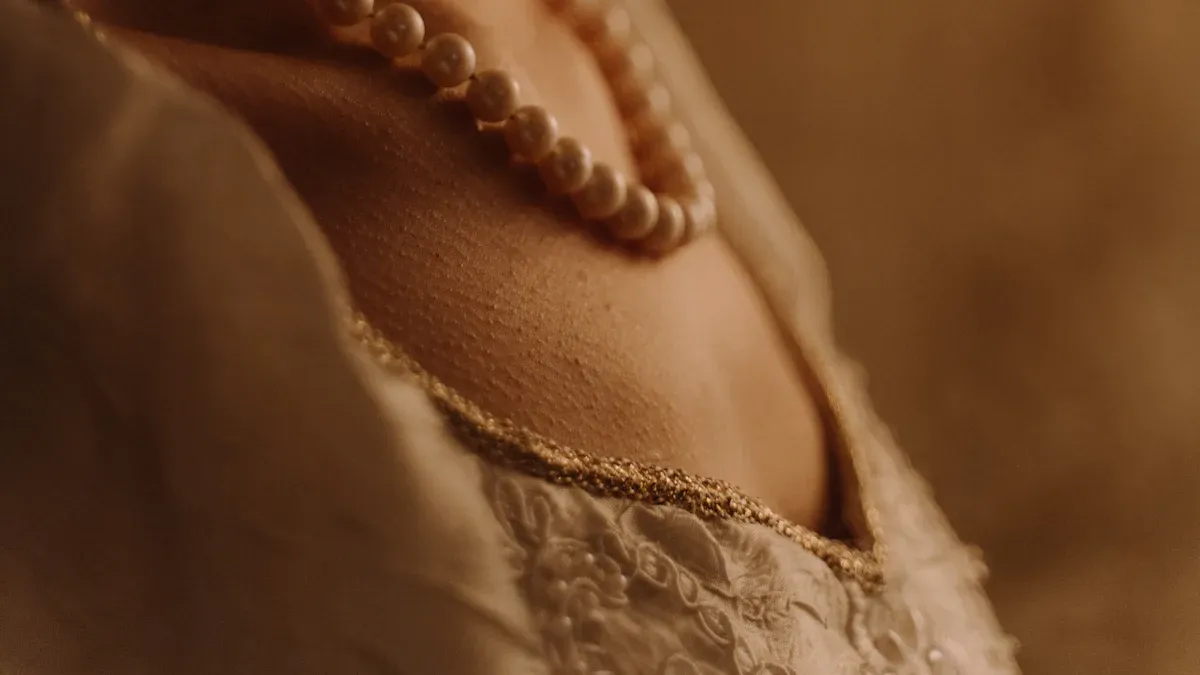
Pearl necklaces date back thousands of years. In ancient civilizations, pearls were much more than mere ornaments. They symbolized prosperity, fertility, and even protection against evil spirits. For example, the Inuit and certain African societies used pearl-adorned talismans to attract luck and fertility. Among the Zulu of South Africa, pearl necklaces were used to convey complex messages, particularly feelings between young people.
Here is an overview of the historical uses of pearls:
Type of object |
Culture |
Function |
Reference |
|---|---|---|---|
Amulets |
Various cultures |
Symbolic and prophylactic |
Alexandre-Bidon 1987, Bozoky 2001 |
Talismans |
Inuit, African societies |
Prosperity and fertility |
Preston-Whyte 1994 |
Pearl necklaces |
Zulu of South Africa |
Communication of feelings |
Twala 1951, Schoeman 1983 |
These examples show that pearls have always had a strong cultural and symbolic value.
Pearls in European royalty
During the Middle Ages and the Renaissance, pearls became a symbol of power and wealth in Europe. Queens and nobles wore them to display their status. For example, Queen Elizabeth I often wore pearl necklaces to emphasize her authority and elegance. Pearls were also exchanged as diplomatic gifts between royal courts. Their rarity and natural luster made them coveted treasures.
The impact of fashion icons on their popularity
Modern fashion icons have played a key role in the return of pearl necklaces. Celebrities such as Rihanna and Angelina Jolie wear them regularly, pairing them with contemporary outfits. This has reinforced their image of elegance and sophistication. Trends evolve, but pearls remain timeless thanks to their ability to adapt to all styles.

Pearls are no longer reserved for formal events. They are now incorporated into everyday fashion, proving their versatility and universal appeal.
The different types of pearls
Natural and cultured pearls
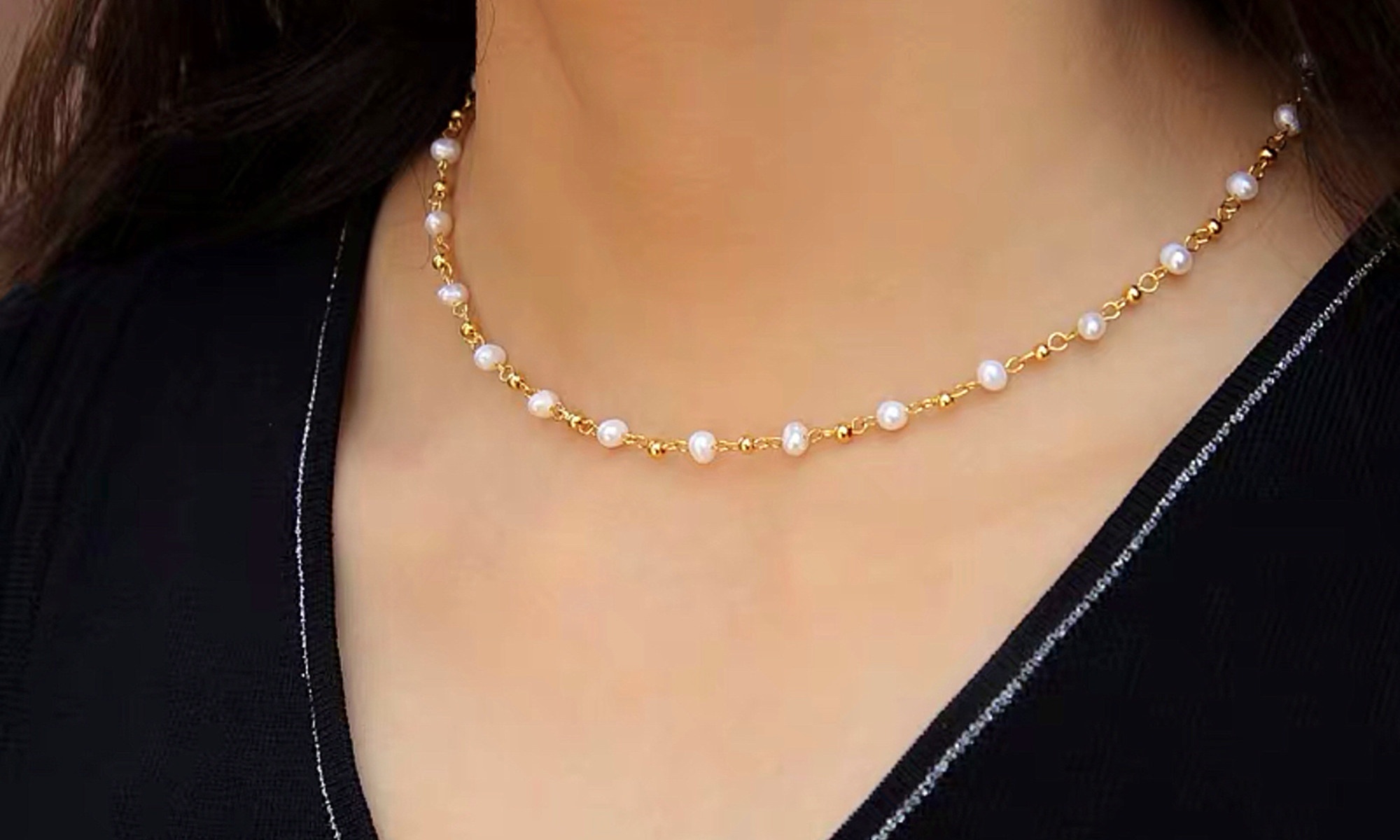
Natural pearls form without human intervention. They are created when a foreign object, such as a grain of sand, enters an oyster or mollusk. The animal reacts by covering this intruder with successive layers of nacre, thus creating a pearl. These pearls are extremely rare and precious.
Cultured pearls, on the other hand, result from human intervention. Producers insert a nucleus or a piece of fabric into the mollusk to trigger pearl formation. This process allows pearls to be produced in greater quantities while retaining their natural beauty.
💡 Tip: Natural pearls are often more irregular in shape, while cultured pearls have a more uniform roundness.
Freshwater and saltwater pearls
Freshwater pearls come from mollusks living in rivers and lakes. They are often more affordable and offer a wide variety of shapes and colors. These pearls are ideal if you are looking for a unique and accessible piece of jewelry.
Saltwater pearls, on the other hand, grow in the oceans. They include famous varieties such as Akoya, Tahitian, and South Sea pearls. These pearls are generally shinier and rounder than freshwater pearls.
-
Key differences between freshwater and saltwater pearls:
Freshwater pearls are often smaller and less expensive.
Saltwater pearls offer superior luster and larger sizes.
Freshwater pearls can have baroque shapes, while saltwater pearls are often perfectly round.
Akoya, Tahitian, and South Sea pearls: unique characteristics
Each type of saltwater pearl has distinct characteristics that make it unique.
Pearl type |
Origin |
Size (mm) |
Color |
Cultivation time (years) |
|---|---|---|---|---|
Akoya pearls |
Japan, China, Vietnam |
2 to 9 |
White, cream, beige |
0.67 to 2 |
South Sea pearls |
Australia, Philippines, Indonesia |
10 to 20 |
White, silver, gold |
2 to 6 |
Tahitian pearls |
Tahiti |
8 to 16 |
Black, gray, silver with colored luster |
4 to 5 |
Akoya pearls: These pearls are famous for their brilliant luster and small size. They are perfect for classic and elegant necklaces.
South Sea pearls: These pearls are the largest and rarest. Their golden or silver color adds a luxurious touch to any piece of jewelry.
Tahitian pearls: These exotic black pearls, often tinged with green or blue reflections, captivate with their mystery and sophistication.
Pearls, whether natural or cultured, freshwater or saltwater, offer incredible diversity. You can choose the ones that best suit your style and preferences.
Ways to wear a pearl necklace
Classic styles for formal events
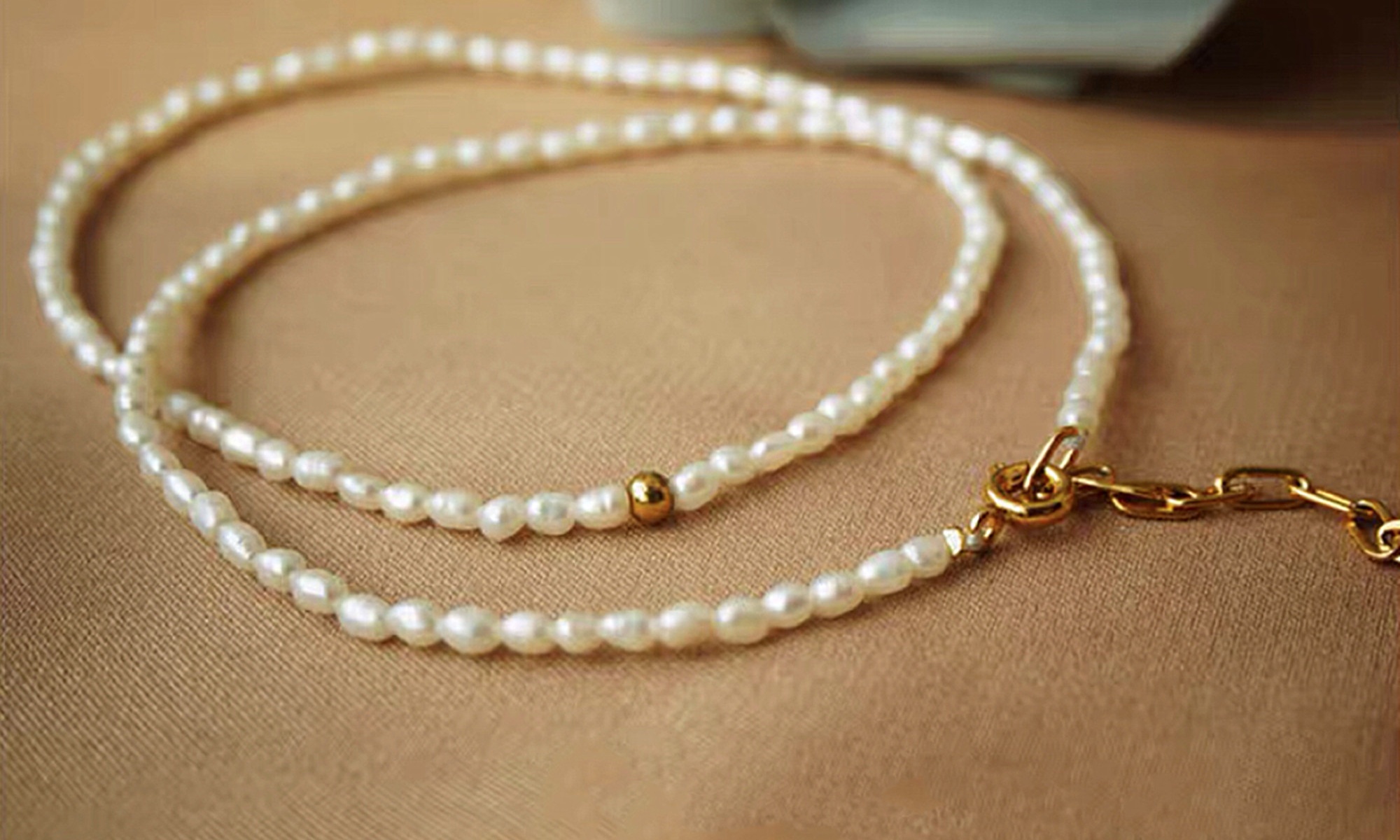
A pearl necklace remains a must-have choice for formal occasions. It adds a touch of elegance and refinement to your outfit. You can wear it with a long evening dress or wedding attire for a classic and sophisticated look.
Pearl necklaces are considered timeless accessories that add a touch of elegance to formal events such as weddings and galas.
They embody timeless class, which highlights their relevance on occasions where elegance is essential.
White or cream pearls are particularly suited for these events. They pair perfectly with neutral colors such as black, navy blue, or gray. If you want a bolder style, opt for black Tahitian or golden South Sea pearls.
Pairing pearls with modern outfits
Pearl necklaces are not reserved for formal events. You can incorporate them into modern looks for a unique and trendy style. For example, pair a pearl necklace with jeans and a white t-shirt for a chic and casual contrast.
“Thus, it is no longer surprising to see a man wear a pearl necklace in fashion, paired with a casual jeans-and-sneakers look… The rules have been completely reinvented,” confirms José de Oliveira.
Colored or baroque pearls are ideal for modern outfits. They add a touch of creativity and originality to your style. You can also layer several pearl necklaces of different lengths for a bohemian and contemporary effect.
Choosing the ideal length according to your body shape
The length of the necklace plays an essential role in highlighting your silhouette. For smaller body shapes, opt for short necklaces such as chokers or princess lengths. They draw attention to the face and neck.
Larger body shapes can opt for long necklaces, such as sautoirs. These styles elongate the silhouette and add a touch of sophistication. If you want a versatile style, choose an intermediate-length necklace that adapts to different outfits.
“Due to global warming, there is no longer any certainty about the possibility, in the coming years, of being able to continue cultivating pearls, and certainly not in current volumes. A pearl necklace thus becomes a true investment, increasing in value over the years,” explains the CEO of Tasaki Europe.
By following these tips, you will discover different ways to wear a pearl necklace while highlighting your style and body shape.
Pearl necklaces in current trends
Their presence in popular culture
Pearl necklaces hold an important place in popular culture. You have surely noticed them in movies, TV shows, or even on red carpets. Actresses like Audrey Hepburn in Breakfast at Tiffany's have contributed to their iconic image. Today, modern celebrities like Harry Styles or Billie Eilish are adopting them, breaking traditional rules.
Pearls are no longer limited to a classic style. They are incorporated into bold and original looks. You can see them worn with casual clothing or avant-garde outfits. This versatility reflects their ability to evolve with trends while retaining their timeless elegance.
The return of pearls in contemporary fashion
Pearls are experiencing a real revival in current fashion. Jewelry designers are reinventing their designs to appeal to a new generation. You will find pearl necklaces paired with modern materials such as steel or leather. These combinations offer a unique contrast and attract contemporary style enthusiasts.
Pearl necklaces also adapt to different ways of wearing accessories. For example, baroque pearls, with their irregular shapes, are very popular for a bohemian look. Colored pearls, on the other hand, add a touch of whimsy to your outfits.
Why they remain a timeless choice
Pearl necklaces have stood the test of time thanks to their rich history and symbolism. For thousands of years, civilizations such as the Egyptians and Romans considered them symbols of purity and wealth. You can still see them at special events such as weddings, where they embody elegance and tradition.
Their timelessness also lies in their ability to adapt to all styles. Whether you prefer a classic or modern look, pearls offer endless ways to wear them. They remain a safe choice to express your personality while adding a touch of sophistication.
Pearl necklaces embody timeless elegance and unique versatility. You can wear them for formal occasions or incorporate them into modern outfits. Their ability to adapt to all styles makes them an essential piece of jewelry in any collection.
💡 Tip: Adopt a pearl necklace to enhance your everyday life. This classic piece of jewelry adds a touch of sophistication to every moment of your life.
Explore the many ways to wear them and let yourself be captivated by their eternal charm.
FAQ
What are the criteria for choosing a pearl necklace?
To choose a necklace, examine the size, color, and luster of the pearls. Also consider the length of the necklace according to your body shape. Finally, check whether the pearls are natural or cultured to determine their value and durability.
How to care for a pearl necklace?
Clean your pearls with a soft, damp cloth after each use. Avoid chemicals such as perfumes or creams. Store them separately from other jewelry to prevent scratches.
💡 Tip: Wear your pearls regularly. Contact with your skin helps preserve their natural luster.
Are pearls suitable for men?
Absolutely! Pearls fit perfectly into modern masculine styles. You can opt for short necklaces or baroque pearl bracelets for a bold, on-trend look.
Are pearl necklaces a good investment?
Yes, especially natural or rare pearls such as those from Tahiti or the South Seas. Their value increases over time, particularly if they are well cared for.
Can you wear pearls every day?
Yes, pearls suit every occasion. Pair them with casual outfits for an effortlessly chic everyday look. However, avoid wearing them during physical activities to preserve their luster.
💡 Note: Pearls are delicate. Take care to protect them from impacts and harsh products.


