


You're wondering whether a labret or a hoop is better for your first ear piercing. Comfort and healing play an essential role in your choice. Several complications can occur, such as allergic reactions, minor infections, abscesses, keloids, or torn earlobes. To minimize these risks, you should choose an ASTM F-136 titanium piece of jewelry with a polished finish and internal threading. Jewelry for first ear piercings must offer optimal safety. Keep reading to discover tips tailored to each location.
Key Points
Choose a titanium labret for your first piercing. It offers comfort, stability, and reduces the risk of irritation.
Avoid hoops for first piercings. Their movement can slow healing and increase the risk of infection.
Clean your piercing twice a day with a saline solution. This helps prevent infections and promotes rapid healing.
Never touch your jewelry with dirty hands. This reduces the risk of complications and ensures better healing.
Always consult a professional before changing your jewelry. Waiting for complete healing is essential to avoid problems.
Comparison of Jewelry for First Ear Piercings
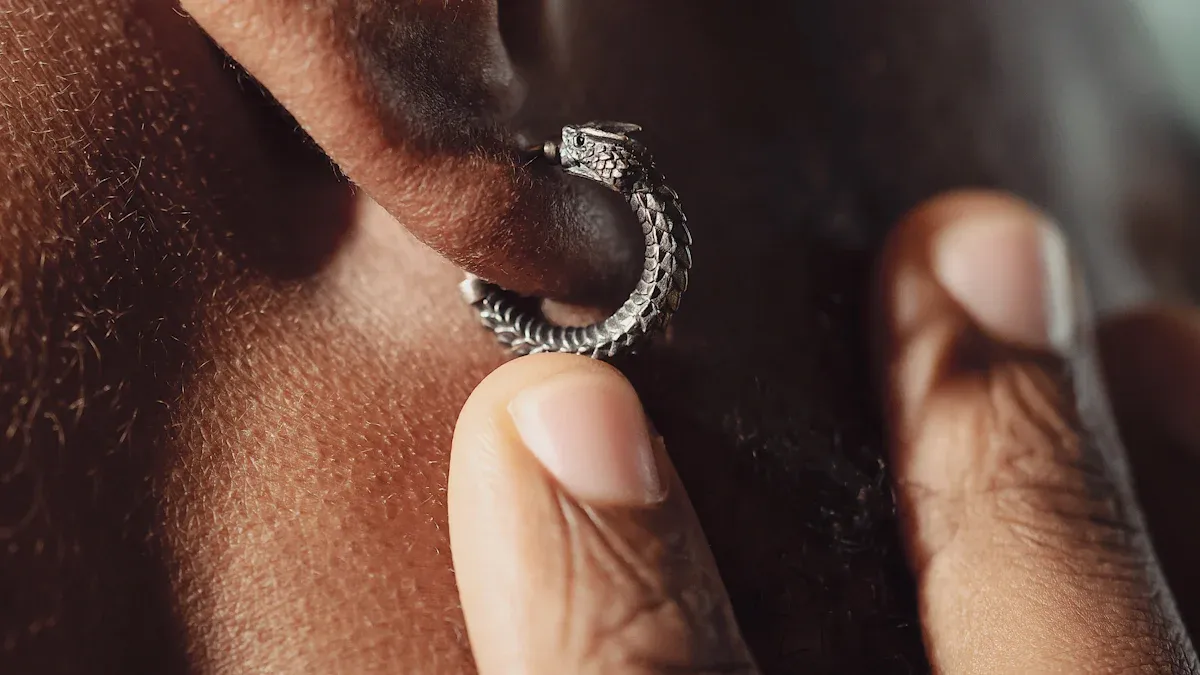 Image Source: pexels
Labret: Stability and Comfort
You want to choose the best jewelry for your first ear piercings. Professionals often recommend a labret for the initial piercing. This choice is based on several simple reasons:
The labret remains stable and barely moves.
It prevents pressure or tension on the pierced area.
Manufacturers often use ASTM-F136 titanium, a hypoallergenic material.
Its straight shape makes daily cleaning easier.
The labret offers superior comfort. You will experience less discomfort during healing. You can sleep on the pierced ear without excessive pain. Cleaning becomes easier because the flat plate of the labret limits the buildup of secretions. Labret-style jewelry for first ear piercings reduces the risk of irritation and complications. You gain peace of mind throughout the entire healing period.
Hoop: Aesthetics and Risks
Hoops are often appealing because of their style. Many people like their discreet or original look. However, they have several disadvantages for first ear piercings.
Their circular shape promotes the accumulation of crust or secretions, making cleaning more difficult.
Hoops catch more easily on clothing, hair, or accessories. This can cause pain or tearing.
The movement of the hoop creates continuous friction on the skin.
Hoops move more than labrets. This movement slows healing and increases the risk of irritation. You must clean them more often and more carefully. Hoop-style jewelry for first ear piercings exposes you to more complications. Professionals advise against hoops for the initial piercing, especially if you want to avoid healing problems.
Tip: For a first piercing, always prioritize safety and comfort. The labret remains the safest choice among jewelry for first ear piercings.
Healing and Safety
Preventing Complications
When choosing jewelry for first ear piercings, you must think about healing. The type of jewelry directly influences healing. A high-quality implant-grade titanium labret reduces the risk of infection. Its smooth surface limits the buildup of bacteria. This makes daily cleaning easier. Stable jewelry prevents microtrauma that slows healing. Repeated movements, often caused by a hoop, create irritation and increase the risk of complications such as keloids or abscesses.
To prevent infections, you must clean the pierced area twice a day with a sterile saline solution. Avoid touching the piercing with dirty hands. Do not change the jewelry before healing is complete. Professionals recommend monitoring for redness, swelling, or unusual pain. If you notice these signs, consult a specialist promptly.
Tip: Suitable jewelry, such as a labret, protects the pierced area and promotes rapid, complication-free healing.
Daily Comfort
Comfort plays a key role in your experience after a piercing. You should be able to sleep, move, and live normally without discomfort. The labret offers several advantages for daily comfort:
It minimizes jewelry movement, reducing the risk of irritation.
You will experience less pain while sleeping.
Its design limits painful snags on clothing or hair.
A hoop, on the other hand, moves more and catches easily. This can lead to nighttime pain or accidental injuries. Labret-style jewelry for first ear piercings gives you peace of mind. You can enjoy more peaceful healing and optimal comfort, day and night.
Hypoallergenic Materials for First Piercings
Implant-Grade Titanium (ASTM-F136)
To ensure the safety of your piercing, you should choose a reliable material from the start. Implant-grade titanium, certified ASTM-F136, is the standard for first ear piercings. This material offers many advantages:
Hypoallergenic: it greatly reduces the risk of allergies or skin reactions.
Non-reactive: it does not oxidize or react with the skin.
Corrosion-resistant: it does not rust, even when exposed to water or sweat.
Lightweight and comfortable: you will almost forget you are wearing jewelry.
Durable: it retains its new appearance for years.
Biocompatible: the human body tolerates titanium very well.
This provides optimal comfort and easier healing. Titanium remains the preferred choice for jewelry for first ear piercings because it minimizes complications and promotes healthy healing.
💡 Tip: Always ask your piercer if the jewelry offered is made of ASTM-F136 titanium.
Metals to Avoid
Some metals can cause adverse reactions, especially with a first piercing. Surgical or stainless steel, for example, often contains nickel. This metal is one of the most common allergens. If you have sensitive skin, you may develop an allergy or irritation. Copper and other uncertified alloys can also cause infections or redness.
To avoid these problems, follow these best practices:
Always read the labels to find out what the jewelry is made of.
Avoid jewelry that does not clearly state its contents.
Choose jewelry certified nickel-, lead-, and cadmium-free.
🛑 Note: Even though stainless steel may seem safe, it can contain nickel. Titanium remains the best hypoallergenic alternative for a first piercing.
Recommendations by Ear Location
Lobe: Optimal Choice
For a first lobe piercing, you can choose a labret or a hoop. Professionals recommend a labret because it offers superior stability and limits the risk of irritation. This piece of jewelry fits precisely and prevents unpleasant rubbing. You can also personalize your labret with 18-karat gold accessories, diamonds, or cubic zirconia. A hoop is still an option for the initial piercing, but it is subject to more movement and therefore carries a higher risk of slower healing. If you prefer a hoop, wait at least 4 to 6 weeks to allow the area to heal properly.
💡 Tip: A titanium or bioplastic labret protects your tissues better and reduces daily discomfort.
Helix: Practical Tips
For a helix piercing, always choose a labret for the initial piercing. This choice limits friction and promotes healing. Hoops are appealing because of their style, but they are only suitable after complete healing, which takes between 6 months and 1 year. Choose jewelry suited to your skin tone: silver for light skin and gold for dark skin. A stud measuring 6 mm in length and 1.2 mm in thickness ensures comfort and safety. Earcuffs are a temporary alternative if you are hesitant about getting pierced.
Conch: Safety First
The conch requires special attention. Choose a titanium labret for the initial piercing to avoid friction and infections. Arrive rested and in good health on the day of your piercing. Never touch the area without washing your hands first. Clean it twice a day with a saline solution. Wear loose clothing to limit contact. A hoop should only be considered after complete healing, often after 6 to 12 months.
Tragus: Comfort and Healing
The tragus requires properly sized jewelry. Choose a labret measuring 4 to 6 mm in length and 1.2 mm in thickness to ensure comfort and proper healing. Hoops are often uncomfortable in this area during the healing phase. Wear specialized jewelry for at least 6 weeks. Follow aftercare instructions to prevent irritation and infection.
🛑 Note: For every location, the labret remains the safest choice for the initial piercing. Switch to a hoop only after complete healing has been confirmed by a professional.
Tips for Caring for Your Piercing
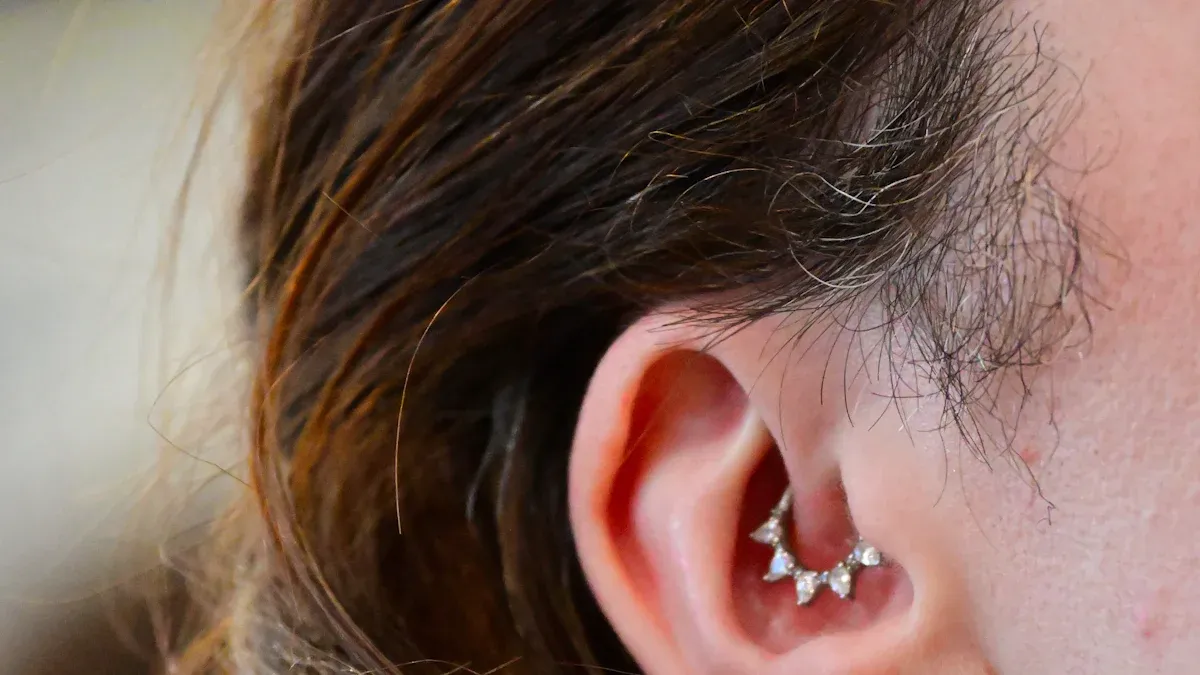
Daily Cleaning
You should establish a simple routine to care for your ear piercing. Professionals recommend not doing too much, as excessive care can slow healing. Choose a gentle, consistent method. Here are the essential steps for effective cleaning:
Wash your hands thoroughly with soap and water before handling your piercing.
Prepare a saline solution: mix one tablespoon of non-iodized sea salt in a glass of warm water.
Clean the piercing with a clean cotton swab soaked in saline solution. Do this morning and evening.
Rinse with warm water to soften deposits and make cleaning easier.
Use a natural liquid soap without fragrance to clean the skin around the jewelry.
Gently pat dry with a clean, dry cotton swab.
💡 Tip: Do not twist the jewelry while cleaning. Avoid antiseptic products, as they can weaken your natural defenses.
Repeat this process until healing is complete. Follow the recommended frequency and monitor for redness or pain. If you notice a problem, consult a professional promptly.
Changing Jewelry
Changing jewelry requires caution and patience. You should never replace the jewelry too soon. Follow your piercer's recommendations regarding the minimum waiting time before changing it. Always wait until the piercing has completely healed to avoid complications.
Wash your hands before touching the piercing.
Do not twist the jewelry while it is healing.
Consult a professional if you have any doubts or encounter difficulties.
A specialist can assist in case of infection or discomfort.
🛑 Note: Waiting for complete healing remains essential. A professional will guide you to ensure safety and comfort when changing your jewelry.
This ensures optimal healing and helps you avoid the risk of irritation or infection. Take good care of your piercing and do not hesitate to ask an expert for advice.
A titanium labret remains the ideal choice for your first ear piercing. You will enjoy superior comfort, rapid healing, and optimal safety. Always choose high-quality jewelry and follow these tips:
Clean your piercing with a saline solution, never an antiseptic.
Do not touch your jewelry with dirty hands.
Avoid twisting the jewelry or sleeping on the pierced ear.
Consult a professional at every step.
Good guidance ensures a worry-free experience and lasting results.
FAQ
Can I wear a hoop for my first ear piercing?
Professionals recommend waiting until healing is complete before wearing a hoop. This limits the risk of irritation and infection. Choose a titanium labret to start.
How long does it take for an ear piercing to heal?
Healing times vary depending on the location. For a lobe piercing, allow 6 to 8 weeks. For cartilage, allow 4 to 12 months. Follow aftercare instructions to speed up healing.
How can I tell if my piercing is infected?
Monitor for the following signs:
Persistent redness
Swelling
Severe pain
Yellowish discharge
Consult a professional promptly if you notice any of these symptoms.
Can I change my jewelry myself after healing is complete?
You can change your jewelry yourself if healing is complete. Always wash your hands first. If you encounter resistance or pain, ask a professional piercer for help.


